You’ve been cooking seriously for a while — maybe you’ve outgrown your starter German knife, or you picked up a decent carbon-steel blade and now you’re curious whether Japanese-style knives live up to the reputation. Shun is one of the most recognized Japanese-style knife brands sold in the U.S., and they make three lines that span a fairly wide price range: the Sora (the entry point), the Classic (their flagship), and the Premier (the step-up). Japanese knives like these are typically thinner, harder, and sharpened to a more acute angle than European-style knives — which makes them exceptionally precise but also a bit more particular about how you treat them. This article breaks down what you actually get at each tier, where the price differences are genuinely justified, and which line makes sense depending on where you are in your cooking practice.
The Steel Story: VG-MAX vs. VG-10 vs. SUS410 Stainless
The knife conversation always starts with steel, so let’s deal with it directly.
The Classic and Premier both use Shun’s proprietary VG-MAX steel at their core. VG-MAX is a fine-grained stainless steel with elevated levels of cobalt, vanadium, and tungsten compared to the widely used VG-10, which is the benchmark steel in this category used by many Japanese knife brands. Shun’s published Steel Technology and Care Guide describes VG-MAX as designed for superior edge retention and finer sharpening potential than standard VG-10. Cook’s Illustrated equipment editors, in their Japanese chef’s knife reviews, have noted that VG-10 already earns high marks for holding a sharp edge significantly longer than European high-carbon steels — placing VG-MAX as an incremental improvement over that already strong baseline, not a transformational leap.
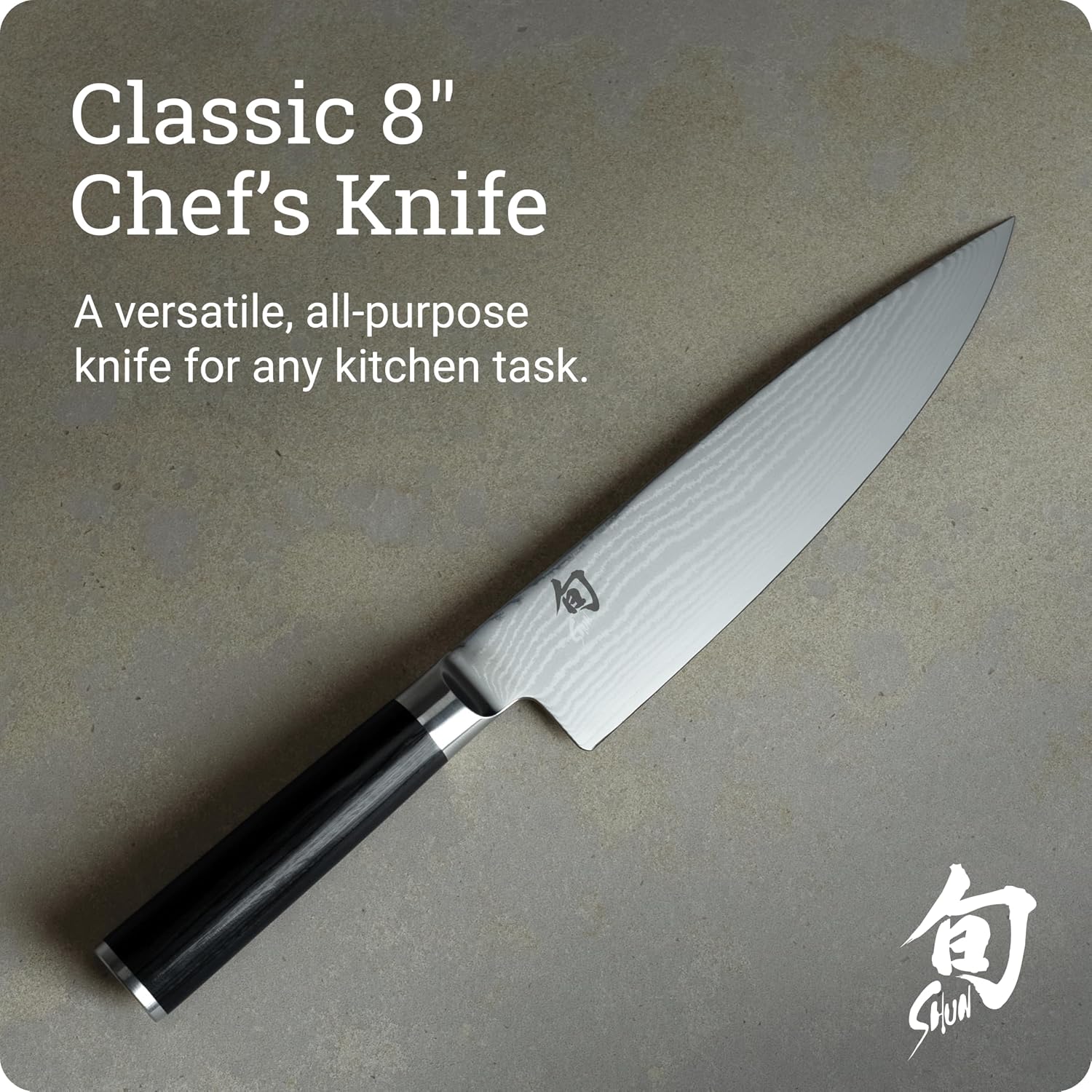
Both core steels are clad in 68 alternating layers of stainless steel — a construction called Damascus cladding — which provides corrosion resistance and gives the blades their distinctive wave-patterned surface.
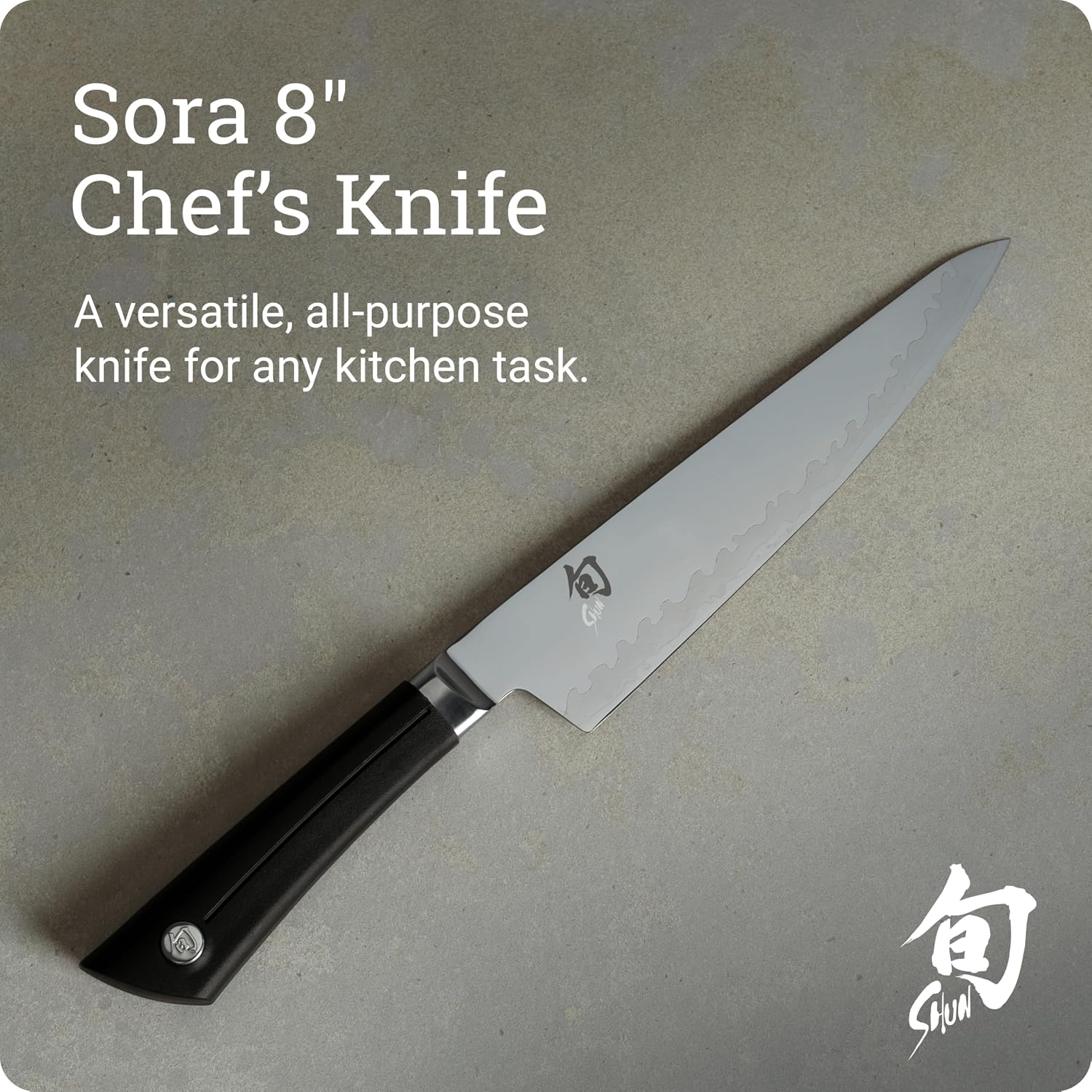
The Sora uses a different approach: a VG-10 cutting core clad in SUS410 stainless steel, with notably fewer cladding layers. The edge is still VG-10, which is genuinely excellent steel — but the overall construction is simpler, and the blade geometry is less refined than the upper tiers.
Steel and Construction at a Glance
| Line | Core Steel | Cladding | Edge Angle (per side) | Handle Material |
|---|---|---|---|---|
| Sora | VG-10 | SUS410 stainless | 16° | Polymer composite |
| Classic | VG-MAX | 68-layer Damascus | 16° | PakkaWood (resin-treated) |
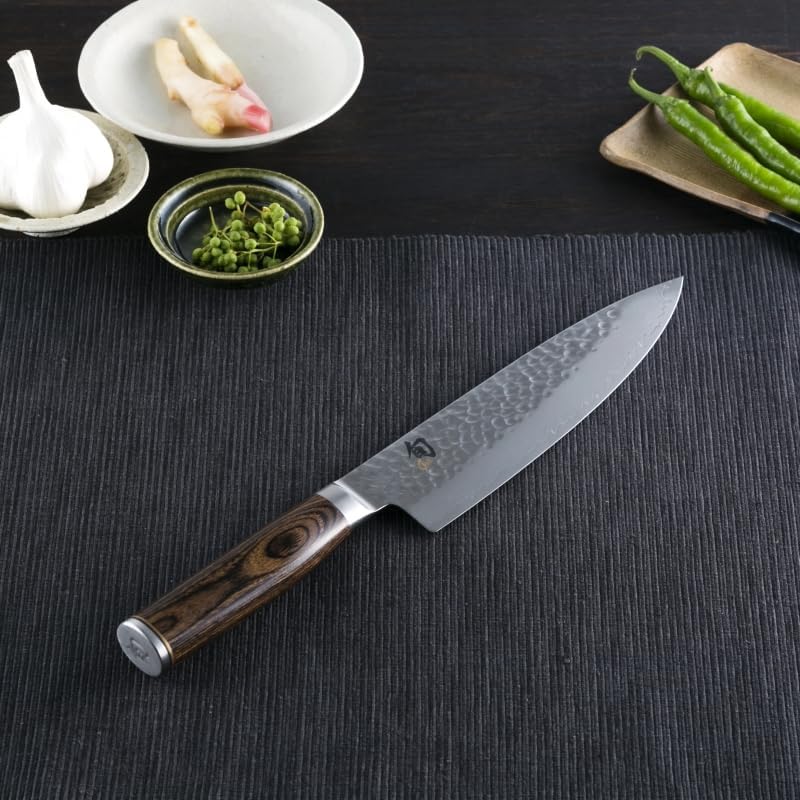
| Premier | VG-MAX | 68-layer Damascus | 16° | Walnut PakkaWood |
Where Each Line Earns Its Price
Shun Sora: The Honest Entry Point
Shun
$109.95
In stock on Amazon
Check price on AmazonThe Sora exists to get you into the Shun family without the full commitment — and based on what owners consistently report, it largely succeeds at that narrower goal.
The VG-10 core delivers real performance. This is not a budget steel with a premium badge. Reviewers who own multiple Shun lines tend to describe the Sora’s cutting edge as genuinely sharp and capable, and several note they could not feel a meaningful difference in day-to-day prep work compared to the Classic. The visible compromise is the handle: a polymer composite rather than the resin-stabilized wood used on upper tiers. One reviewer who owns both a Sora and a Classic described saving roughly $40 by skipping the wood handle and calling the tradeoff “perfect” — they simply don’t prioritize handle aesthetics. That’s a legitimate position. The polymer is ergonomically functional; it just doesn’t carry the same warmth underhand that the Classic’s PakkaWood provides.
The Sora makes sense if: you’re not sure yet whether Japanese knife geometry suits your grip and cutting style, you want genuine VG-10 performance without the Classic’s price, or you’re outfitting a second kitchen or travel kit where you don’t want to worry about the investment.
Shun
$109.95
In stock on Amazon
Check price on AmazonShun Classic: The Line That Actually Converts Skeptics
Shun
$159.00
In stock on Amazon
Check price on AmazonThe Classic is Shun’s flagship, and it’s the line that Serious Eats knife reviewers Lexi Demetriou and Daniel Gritzer, Wirecutter’s Leah Colins and Marguerite Preston, and Cook’s Illustrated’s equipment editors have each cited in coverage of premium Japanese knives. It also has the most interesting buyer psychology of the three. A recurring pattern in owner reviews: hesitation at the price point, purchase, then immediate regret that they waited so long. That delayed-regret pattern is worth paying attention to. It suggests the Classic’s value proposition is real — it just requires the leap.
What you’re getting over the Sora: VG-MAX steel with incrementally better edge retention at the extreme end of sharpening, the full 68-layer Damascus cladding, and the D-shaped PakkaWood handle that has become the visual signature of the line. The D-shape is designed for right-handed grip; Shun does offer left-handed versions, which is a meaningful product consideration.
The Classic is the line where the full Shun design philosophy is expressed without apology. The blade taper, the balance point, the handle geometry — all of these are refined over the Sora. Culinary school grads and private chefs who reach for the Classic tend to describe it in terms of grip confidence over long prep sessions, not just sharpness.
Shun
$159.00
In stock on Amazon
Check price on AmazonShun Premier: When the Premium Justifies Itself
Shun
$219.95
In stock on Amazon
Check price on AmazonThe Premier commands a meaningful premium over the Classic, and the case for it rests on two things: the handle and the blade finish.
The handle on the Premier is walnut-toned PakkaWood with a contoured shape that’s noticeably different from the Classic’s more angular D-profile — consistently described by experienced-cook reviewers as warmer and more enveloping in hand. One reviewer with approximately 20 years of professional cooking experience described the Premier simply as “a badass,” contextualizing that within a career of daily knife handling. That kind of testimony from someone who has genuine alternatives is meaningful. The Premier’s handle isn’t just prettier; experienced cooks report it fits differently, and for long prep sessions, that distinction compounds across hours.
The second differentiator is the tsuchime hammered finish — a hand-hammered surface texture visible across the upper face of the blade. Wirecutter’s chef’s knife coverage notes that blade geometry and overall thinness matter more for food release than surface finish does in most cutting scenarios, so the functional benefit of the tsuchime pattern is genuinely modest and most relevant on soft, wet foods like cucumber or thinly sliced potato. What’s less contested is that the finish makes each Premier blade visually distinct — part of why the line carries collector interest beyond pure function.
If you’re cooking at the level where you spend serious hours in weekly prep, host supper clubs, or work as a private chef, the Premier is the version that rewards sustained daily use most explicitly. The Classic is the right call for most serious home cooks; the Premier is for the cook who will notice the handle difference after hour two of prep.
Shun
$219.95
In stock on Amazon
Check price on AmazonKnife Care Is Not Optional at This Price Point
This deserves more space than a footnote, because the single most consistent complaint across Shun owners — across all three lines — involves rust. And almost without exception, reviewers who report rust on their knives trace it to the same causes: leaving the blade wet, washing in a sink with other utensils, or dishwasher exposure.
VG-MAX and VG-10 are stainless steels, but “stainless” is not the same as “rustproof.” Stainless resists corrosion — it does not eliminate it. Fine Cooking’s editorial guidance on Japanese knife care identifies the correct protocol as straightforward but non-negotiable:
- Wipe the blade dry immediately after use — don’t let water sit on the steel
- Hand wash only — no dishwasher, ever, for any reason
- Store separately — in a knife block, on a magnetic strip, or in a blade guard; not loose in a drawer where edges contact other metal
- Never soak
The Damascus cladding on the Classic and Premier adds layers of corrosion-resistant steel around the core, but it doesn’t make either line maintenance-free. The Sora’s SUS410 cladding is similarly stainless but similarly not impervious to neglect. Per Shun’s Steel Technology and Care Guide, occasional application of a food-safe mineral oil to the blade can also help in humid storage environments.
If you’re buying a Shun as a gift, communicate this care habit explicitly. These knives require a slightly more attentive routine than a German-style workhorse knife, and establishing that habit from day one is far easier than correcting rust six months in.
Frequently Asked Questions
What is the real functional difference between VG-MAX and VG-10, and will a home cook notice it?
For most home cooks cooking three to five days a week — probably not in a meaningful way. VG-MAX is designed for marginally better edge retention and the ability to take a slightly finer edge at the extreme end of sharpening. Cook’s Illustrated’s equipment editors benchmark VG-10 as an excellent steel that already holds an edge longer than most European-style alternatives. The gap between VG-MAX and VG-10 is real in a technical sense; it’s most relevant if you’re sharpening at very acute angles or using the knife in high-volume professional contexts where edge longevity matters across hundreds of cuts per session. For home use, both are excellent, and the Sora’s VG-10 core is not meaningfully inferior in the ways most cooks will notice day-to-day.
Is the Sora’s polymer handle a genuine quality compromise, or do experienced cooks find it acceptable?
It’s a real difference, not a catastrophic one. The polymer handle is functional, ergonomic, and durable — it won’t absorb moisture or crack the way an untreated wood handle might. What it lacks is the tactile warmth and visual weight that PakkaWood provides. Reviewers who own both a Sora and a Classic frequently describe the handle as the primary difference they notice — not the steel performance, not the blade geometry, but the feel underhand over time. Whether that matters depends on how much you value tactile experience. A cook who evaluates a knife purely on grip control may find the Sora fully satisfying. A cook who notices the quality conversation between hand and handle over a two-hour prep session will likely prefer the Classic upward.
Does the Premier’s tsuchime hammered finish meaningfully reduce food sticking?
Both functionally and aesthetically — but the honest answer leans toward aesthetics for most uses. The physics argument for hammered finishes is real: surface texture interrupts the vacuum that forms between a flat blade and soft, wet food, potentially reducing drag on cuts like cucumber slices or thinly sliced potato. However, Wirecutter’s chef’s knife coverage notes that blade geometry and overall thinness matter more for food release than surface texture does in most practical cutting scenarios. Owner reports on the Premier’s tsuchime finish are mixed on whether it produces a noticeable functional difference in daily prep — most praise it, but several acknowledge they can’t isolate the finish as the cause. The honest framing: the tsuchime finish likely offers a modest benefit on specific cuts, is definitively visually distinctive, and contributes to the Premier’s sense of being a different-tier object. It is not the primary reason to choose the Premier; the handle and overall refinement are.
Can you sharpen a Shun at home on a whetstone, or do you need Shun’s sharpening service?
Home sharpening on a whetstone is entirely possible and is how most experienced knife users maintain their Shuns. A typical progression: 1000-grit for edge repair, 2000–3000 grit for refining, and 6000–8000 grit for polishing the final edge. The 16-degree-per-side bevel is consistent and learnable. Shun does offer a free lifetime sharpening service — you ship the knife to them and they return it sharpened — which is a meaningful value-add for cooks who aren’t comfortable with whetstone technique. Serious Eats’ knife coverage recommends that honing rods used with Japanese knives be ceramic or leather strop rather than grooved steel honing rods, which can chip the harder, more brittle edge steel at these angles. The short version: home maintenance is entirely achievable, and Shun’s service is a genuine safety net for cooks who’d rather not learn the skill.
The Decision Frame
If you’re at the “finally doing this” moment, the logic sorts cleanly:
Buy the Sora if you’re testing Japanese knife geometry, outfitting a secondary kitchen, or genuinely indifferent to handle materials. The steel is real; the price is accessible. Shun — $109.95
Buy the Classic if you’re committing to a primary knife you’ll use for years. The value proposition lands — owners consistently report it, and the delayed-regret pattern is a signal worth respecting. This is where Shun’s design is fully expressed. Shun — $159.00
Buy the Premier if you spend serious hours in prep, care about handle feel over long sessions, and want a knife that functions as both a high-performance tool and an object you’ll enjoy reaching for. The experienced-cook voices in Premier reviews are the most convincing case for the tier — these are people who know what alternatives look like. Shun — $219.95
All three lines reward correct care. None of them forgives a dishwasher.