You’re standing in front of a copper pan at a kitchen-supply store — or more likely, you’ve been staring at one in a browser tab for three weeks — and you can’t quite pull the trigger. The pan is beautiful. The price is serious. And somewhere in the back of your mind, you’ve heard the phrase “copper is reactive” or “copper needs polishing” without anyone ever explaining what those phrases actually mean for your Tuesday-night cooking routine. That’s the gap this article closes.
Copper cookware refers to pots and pans made with copper as a primary material — either solid copper throughout, or copper bonded in layers with stainless steel and sometimes aluminum. Copper conducts heat faster and more evenly than almost any other cookware material, which is why professional kitchens and serious home cooks have prized it for centuries. But copper also oxidizes (reacts with air and moisture to change color and surface texture), requires occasional cleaning beyond soap and water, and is incompatible with induction stovetops unless the pan has a magnetic base layer added. Whether those trade-offs are deal-breakers depends almost entirely on whether you knew about them going in — and across owner reviews for Viking, Lagostina, Mauviel, and Hestan CopperBond, that single variable explains more about satisfaction scores than the pans themselves.
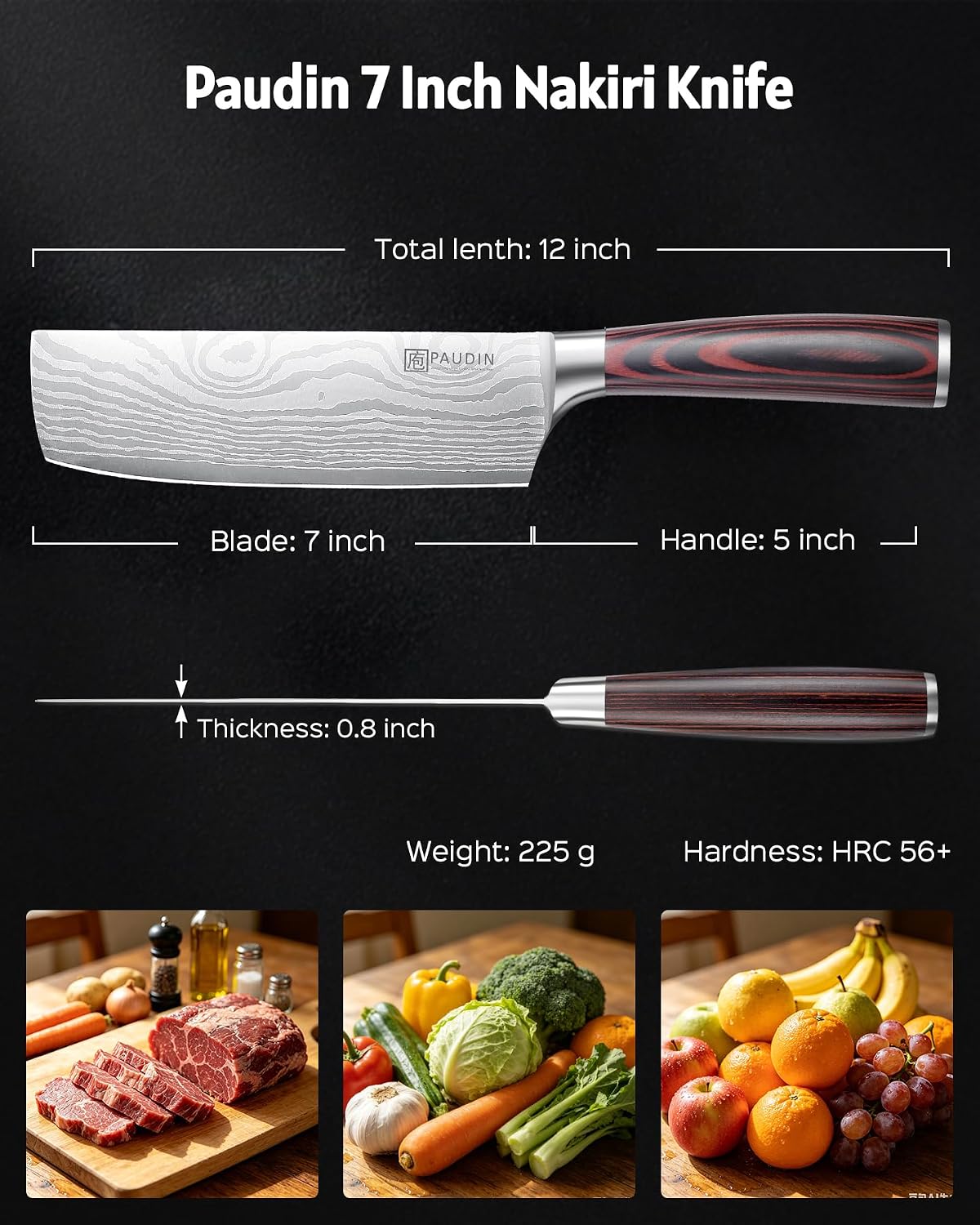
| EDITOR'S PICKMauviel M'Heritage 150 B 1.5mm… | Mid-tier[Lagostina Martellata Tri-ply Ha](https://www.amazon.com/dp/B086WR1SM7?tag=greenflower20-20)… | Budget pickPAUDIN Nakiri Knife - 7" Razor… | |
|---|---|---|---|
| Material | Copper & Stainless Steel | Tri-ply Hammered Copper | High Carbon Stainless Steel |
| Piece Count | 12 | 11 | — |
| Thickness | 1.5mm | — | — |
| Handle Material | Brass | — | Ergonomic |
| Made In | France | — | — |
| Knife Category | — | — | Nakiri |
| Price | $2,399.95 | $599.99 | $43.99 |
| See on Amazon → | See on Amazon → | See on Amazon → |
The Pattern That Shows Up in Every Review Thread
Here’s what’s striking when you read through aggregated owner feedback on copper cookware: the complaints and the raves are often about the same pan. The difference isn’t quality — it’s expectation alignment.
The clearest example comes from Hestan CopperBond owners. Hestan CopperBond uses a five-layer construction — stainless steel interior, copper core, aluminum layers, and a copper exterior — which means the outside is genuinely copper-colored at purchase. Multiple owners note that the copper exterior begins changing color after the first few uses, shifting toward a mellowed patina. This is normal behavior that the manufacturer acknowledges. Owner frustration in these cases is legitimate: if you spend premium money partly for the visual appeal of gleaming copper and no one tells you the exterior will shift in appearance, that’s a material omission at the point of sale. The pan’s performance didn’t change. The owner’s relationship to the purchase did.
Fine Cooking’s feature “Copper Cookware: Beautiful, Responsive, and High-Maintenance” consistently notes that copper’s natural patina development is treated as a feature in professional kitchens — cooks regard it the way woodworkers regard a natural oil finish on walnut — but the consumer retail channel doesn’t always communicate this clearly. That’s a retailer and marketing failure, not a product failure.
Lagostina’s copper line tells a slightly different story. Reviewers across platforms consistently lead with aesthetics — the visual appeal of the pan is mentioned before function in a striking number of reviews. This suggests Lagostina’s marketing is landing its visual promise effectively. What it also suggests: a meaningful share of Lagostina copper buyers are purchasing primarily on appearance, which means they’re the least likely to have researched maintenance requirements beforehand. The Spruce Eats’ “Best Copper Cookware Sets” roundup flags Lagostina as an accessible entry point to the category, which is accurate — and which makes expectation-setting at purchase even more important for that buyer profile.
Comparing the Main Players: Viking, Lagostina, and Mauviel
Viking Copper: The Considered-Landing-Point Pan
One of the more instructive owner narratives in the copper category involves a buyer who arrived at copper through a specific journey: gifted a coated pan set that chipped, switched to cast iron, then relocated to a home with an induction stovetop, then settled on copper as a deliberate choice after research. That trajectory — experimentation, disappointment, constraint, then informed selection — describes exactly the buyer who tends to be satisfied with copper long-term.
Viking’s copper line uses a multi-ply construction with a copper exterior and stainless cooking surface. The buyer who arrives at Viking copper after owning cast iron has already internalized the idea that cookware requires technique adjustment — you don’t season cast iron the same way you use stainless, and you don’t use copper the same way you use cast iron. That mental model transfers well.
The buyers who struggle with Viking or any copper brand tend to be those who expected copper to perform like a better version of whatever they already own. It isn’t. It’s a different cooking instrument with different strengths, and the learning curve — roughly two to four weeks of recalibrating flame settings and heat timing — is real but short.
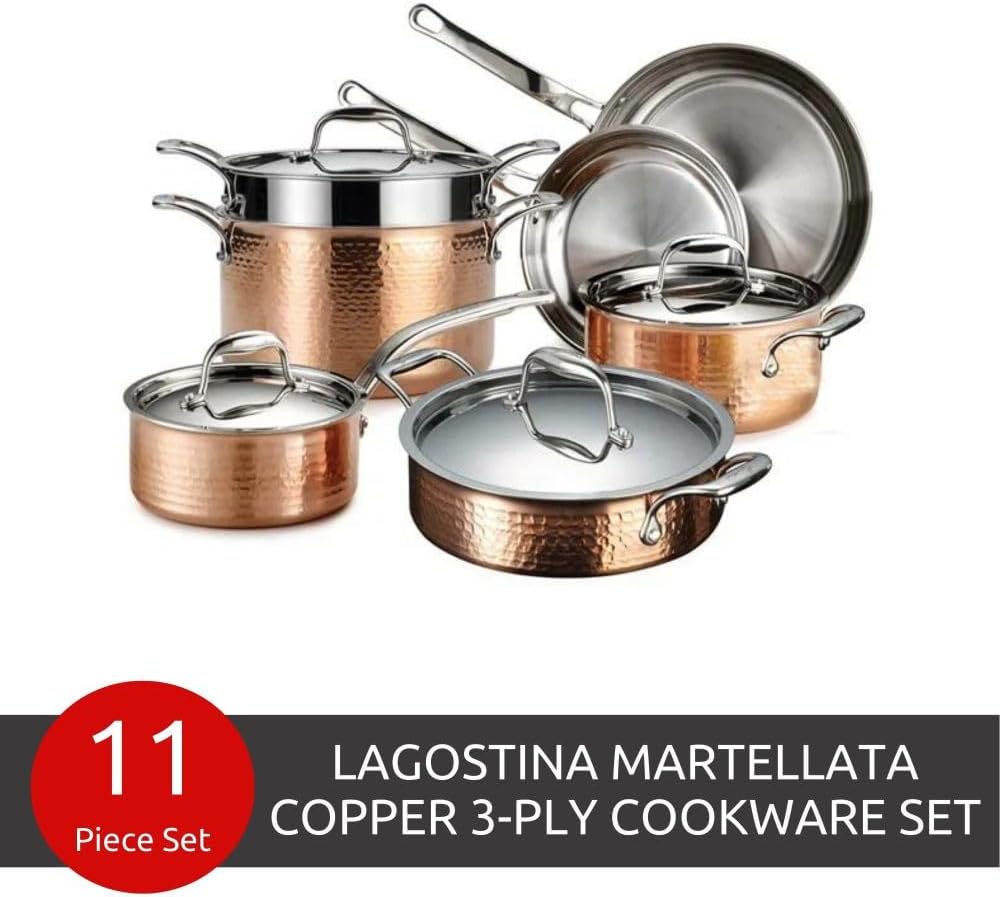
Lagostina
$599.99
In stock on Amazon
Check price on AmazonLagostina Copper: Accessible Entry Point, Elevated Appearance
Lagostina copper is consistently positioned as the accessible on-ramp to serious copper cooking, and that positioning is accurate. The construction is lighter-gauge than Mauviel’s flagship lines, which means slightly less thermal mass and a more forgiving heat response — useful if you’re new to copper. The visual appeal is genuine and well-executed.
The trade-off is longevity and precision at the high end of technique. For everyday cooking, reductions, braises, and stovetop sauces, Lagostina copper performs well above its price-to-tier ratio. For precision sugar work or professional-level sauce reduction where copper’s speed and sensitivity are the entire point, the thinner construction shows its limits. The Spruce Eats’ “Best Copper Cookware Sets” roundup positions Lagostina as a strong first copper purchase rather than a final destination for serious practitioners — an honest and accurate characterization.
Maintenance expectations matter here more than anywhere else in the category. Because Lagostina attracts more appearance-motivated buyers, the polishing and patina conversation needs to happen before purchase, not after.
Lagostina
$599.99
In stock on Amazon
Check price on AmazonMauviel: Where Copper Performance Actually Lives
Mauviel occupies a specific position in this category: it’s the name that serious home cooks and culinary-school graduates tend to reach for when they’re ready to commit to copper. The M’Heritage line, particularly the 150s (1.5mm copper thickness, stainless interior) and the heavier 250c (2.5mm copper), carries genuine craft credibility. Cook’s Illustrated’s equipment review “The Best Copper Cookware” has rated Mauviel’s heavier-gauge pieces among the most responsive for precise sauce work.
Owner feedback for the Mauviel M’Heritage 150 CI — the cast iron handle version — includes a specific quality-control flag worth taking seriously at this price tier: visible milling marks on the stainless steel interior, with insufficient polishing. Milling marks aren’t a performance issue, but they are a finish-quality issue, and at the price Mauviel commands, owners have reasonable grounds to expect a cleaner interior surface. If you’re considering the 150 CI specifically, inspect the interior at purchase or buy from a retailer with a clear return policy.
The more common Mauviel complaints — hot handles, scorching, difficulty cleaning — are worth examining separately because they’re almost universally technique issues rather than product defects. Serious Eats’ feature “Why Copper Cookware Is Worth the Price — and the Upkeep” explains this directly: copper heats so quickly and responsively that cooks accustomed to stainless or cast iron often run it too hot. Copper rewards lower flame settings than you’d use with a tri-ply stainless pan. Scorching in a copper pan is almost always a signal that the burner is set higher than the pan needs. Similarly, copper’s construction means handles conduct heat more than the thick-handled cast iron or stainless pans most cooks are used to — handle protectors or a folded towel are part of copper cooking, not optional accessories.
Mauviel M’Heritage construction tiers at a glance:
- M’150s: 1.5mm copper exterior, stainless steel interior, stainless handle
- M’250c: 2.5mm copper exterior, stainless steel interior, cast bronze handle
- M’Heritage 150 CI: 1.5mm copper, stainless interior, cast iron handle
The weight difference between the 150s and 250c sauté pans runs approximately 30–40% heavier for the 250c. That matters for your actual decision. The 250c’s additional copper thickness means more thermal mass and slightly slower response to flame changes — still faster than stainless, but noticeably more forgiving than the 150s. If you’re coming from cast iron or a tri-ply stainless set, the 250c’s behavior will feel more familiar. If you want the full, instantaneous copper responsiveness that makes the material legendary for sugar work and delicate sauces, the 150s is closer to that experience.
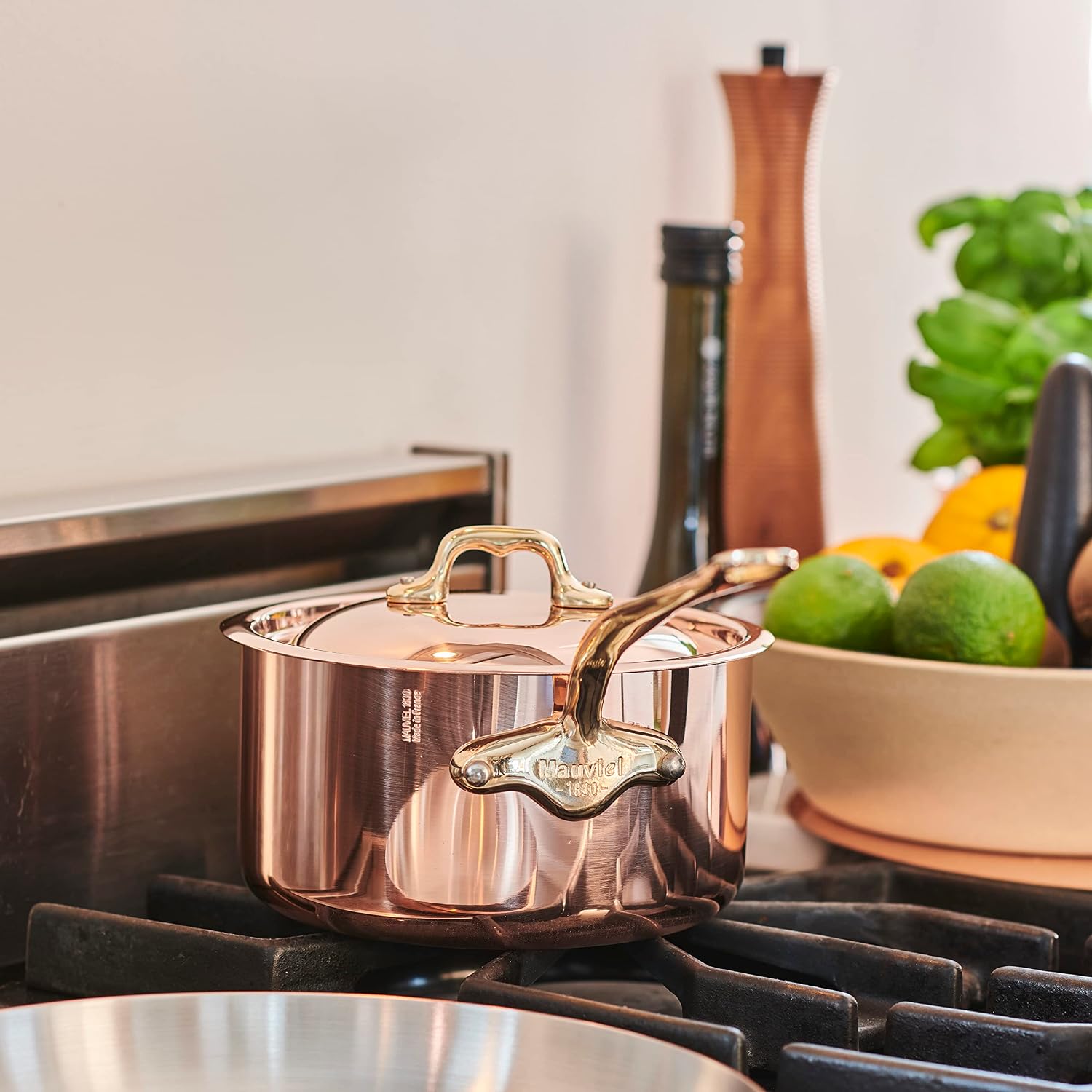
Mauviel
$2,399.95
In stock on Amazon
Check price on AmazonInduction, Polishing, and the Practical Questions
Frequently Asked Questions
Does copper cookware work on induction cooktops?
Standard copper does not work on induction. Induction stovetops work by creating a magnetic field that directly heats a magnetic material in the pan’s base. Pure copper is not magnetic, so it won’t heat on induction at all. Some manufacturers engineer an induction-compatible magnetic stainless layer into the pan’s base — Hestan CopperBond is one example. If induction compatibility matters to you, verify it specifically for the model you’re considering. “Copper” as a category does not default to induction-safe, and no amount of copper construction compensates for a non-magnetic base on an induction surface.
How often do you need to polish and maintain copper pans?
This depends on your tolerance for patina. Copper will oxidize naturally with heat and air exposure — the exterior will develop a darker, less uniform appearance over time. This does not affect cooking performance. If you want the pan to look as it did when it arrived, polish it periodically with a copper-safe cleaner (cream of tartar paste or commercial copper polish both work). Most serious copper users polish a few times per year or before occasions — not after every use. The interior stainless or tin lining is cleaned like any other pan with warm water and mild soap. Fine Cooking’s “Copper Cookware: Beautiful, Responsive, and High-Maintenance” covers the full maintenance picture clearly and is worth reading before your first purchase.
What is the difference between tri-ply copper and solid copper cookware?
Tri-ply copper typically means a pan with a copper layer bonded between stainless steel layers — similar in construction concept to tri-ply stainless, which uses aluminum as the core. The copper layer improves heat distribution over all-stainless, but it is not the same as having a thick copper exterior with a thin stainless lining, which is how traditional French copper cookware and Mauviel’s M’Heritage line are built. Solid copper with a tin or stainless lining is the classic, highest-responsiveness configuration. Tri-ply copper is more approachable for maintenance and typically less expensive, but the thermal performance difference is meaningful if you are cooking at a precision level where copper’s speed and sensitivity are the point.
Are Mauviel copper pans worth the premium over Lagostina or Viking?
If your primary use case is precise, technique-dependent cooking — reducing sauces, working with sugar, cooking proteins where a small temperature difference matters — the Mauviel M’250c’s heavier copper construction delivers meaningfully different performance than lighter-copper or copper-exterior alternatives. The cost-per-year math favors Mauviel if you’ll use it seriously over a decade or more; copper pans are essentially permanent cookware if maintained. If you’re buying primarily for aesthetics or occasional use, the performance premium may not match your actual cooking. Lagostina and Viking copper are genuinely good pans — the Mauviel gap is real but only relevant if you’re cooking at the level where it shows up.
Can copper pans scorch food, and if so, why?
Yes — and it almost always comes down to heat level. Copper heats faster than virtually any other common cookware material, which means your instinct to use a medium-high flame calibrated for stainless or cast iron will overshoot in copper. Medium or even medium-low on most home burners is sufficient for the vast majority of copper cooking. As Serious Eats’ feature “Why Copper Cookware Is Worth the Price — and the Upkeep” makes clear, one-star reviews citing scorching are in nearly every case a heat calibration issue, not a product defect. Give yourself two weeks of conscious flame adjustment when you first start cooking on copper, and the problem resolves.
If X, Then Y: The Decision Framework
If you already own cast iron or carbon steel and you’re comfortable adjusting technique for your pan, copper is the natural next step — the learning curve will feel familiar. If you’re replacing a set of nonstick and you’ve never managed a reactive pan before, start with a single copper saucier before committing to a full set.
If induction is your primary cooking surface, verify induction compatibility on the specific model before purchase — do not assume it based on appearance or copper content alone.
If you want Mauviel and you’re considering the 150 CI, inspect the interior finish carefully or buy with a clear return window. The milling-mark concern is specific and real at that price point.
If you find yourself attracted to copper primarily for how it looks on the wall, that’s a completely legitimate reason to buy — but read one article on copper maintenance first. The entire category of buyer regret in this space traces back to a five-minute knowledge gap, and it’s an easy gap to close before you spend serious money. Fine Cooking’s “Copper Cookware: Beautiful, Responsive, and High-Maintenance” and The Spruce Eats’ “Best Copper Cookware Sets” roundup together cover the full picture of what you’re signing up for — aesthetically and practically — in well under half an hour.