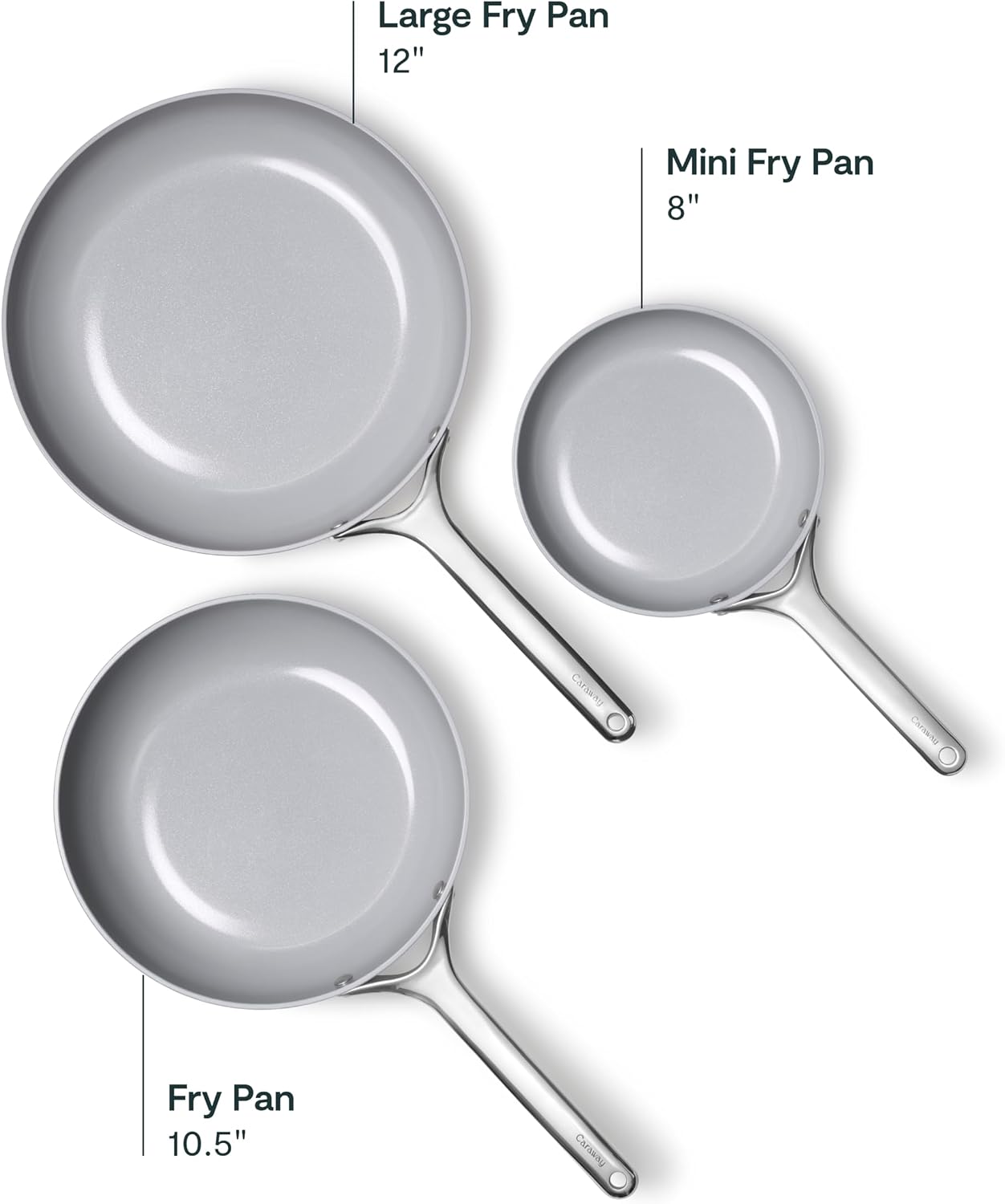
You’ve been cooking seriously for a while now — long enough that you’ve moved past the basic nonstick skillet that shipped with your first apartment. You’re staring at two categories that keep coming up: ceramic nonstick (a coating made from a silica-based gel, fired onto a metal base, that releases food without traditional chemicals) and carbon steel (a raw iron-and-carbon alloy pan, similar to cast iron but thinner and lighter, that builds its own slick surface through seasoning — layers of polymerized oil). Both promise “nonstick performance.” Both have real advocates. And both cost enough — from $60 on the low end to $250-plus for premium versions — that buying the wrong one for your cooking style stings.
This article is for the cook who already understands the basic vocabulary and is trying to make a committed, long-term decision. We’ll name the tradeoffs plainly, show the math where it matters, and end with a clear framework: if your cooking looks like X, the answer is Y. No hedging.
| EDITOR'S PICK[Caraway Fry Pan and Sauté Pan D…](https://www.amazon.com/dp/B0D4SNSP1Z?tag=greenflower20-20) | Mid-tier[de Buyer MINERAL B Carbon Steel…](https://www.amazon.com/dp/B00462QP1G?tag=greenflower20-20) | Budget pickOXO Enhanced 12" Frying Pan Ski… | |
|---|---|---|---|
| Material | Ceramic | Carbon steel | Ceramic |
| Diameter | 10.5" & 12" | 12.5" | 12" |
| Oven safe | ✓ | — | ✓ |
| Dishwasher safe | — | — | ✓ |
| Includes lid | ✓ | ✗ | — |
| Set size | 3 pieces | — | — |
| Price | $232.00 | $109.99 | $79.99 |
| See on Amazon → | See on Amazon → | See on Amazon → |
What You’re Actually Comparing
At the surface, both pans solve the same problem: food that doesn’t stick. But they solve it through fundamentally different mechanisms, and that difference cascades into almost every aspect of daily use.
Ceramic nonstick applies a silica-derived coating — sometimes marketed under brand names like Thermolon (used by GreenPan) or Ceramica (Scanpan’s proprietary formulation) — over an aluminum or stainless base. The coating is slick from day one, requires no break-in, and is marketed as free from PTFE (polytetrafluoroethylene, the compound in traditional Teflon-style nonstick) and PFOA. In testing coverage published by Wirecutter in their guide “The Best Nonstick Pans,” ceramic coatings showed strong initial release performance but measurable degradation in release quality over 12–18 months of regular use, particularly when exposed to sustained high heat.
Carbon steel is a different story. A new carbon steel pan is not nonstick — it’s raw, reactive, and needs to be seasoned before it performs well. Seasoning means building up thin layers of polymerized oil through repeated high-heat cycles. In Serious Eats’ guide “What Is Carbon Steel and How Do You Season It?,” the process is described as analogous to building a natural polymer coating that, once established, rivals traditional nonstick for eggs and delicate fish. The payoff is a surface that improves with use rather than degrading, and that handles ripping-hot temperatures without damage.
Those two trajectories — “slick from day one, fades over time” versus “rough start, gets better forever” — define almost every tradeoff downstream.
The Five Tradeoffs That Actually Decide It
Heat Ceiling
This is where carbon steel wins decisively and why professional kitchens run almost exclusively on carbon steel and cast iron rather than nonstick coatings of any kind.
Carbon steel’s heat ceiling is effectively unlimited for home-cooking purposes. Manufacturers including Matfer Bourgeat and de Buyer spec their carbon steel pans as oven-safe to 600°F or higher, and the material handles the broiler or a screaming-hot induction burner without issue. In Cook’s Illustrated’s carbon steel skillet evaluation, reviewers noted that carbon steel heats somewhat unevenly early in its life — the lighter gauge compared to cast iron can produce hot spots — but seasons into more even performance as the polymerized coating fills micro-abrasions in the metal surface.
Ceramic nonstick has a real ceiling: most manufacturers rate their coatings to 450–500°F. High-heat abuse is consistently identified in Serious Eats’ equipment coverage as the primary accelerant of ceramic coating failure. If your cooking involves searing proteins at high heat before finishing in a hot oven, you’re working right at the edge of what ceramic can safely handle. Above that threshold, you risk micro-cracking the coating and accelerating surface breakdown.
Decision point: If your daily cooking includes high-heat sears, stir-fry technique, or broiler finishing, carbon steel is the only durable long-term choice.
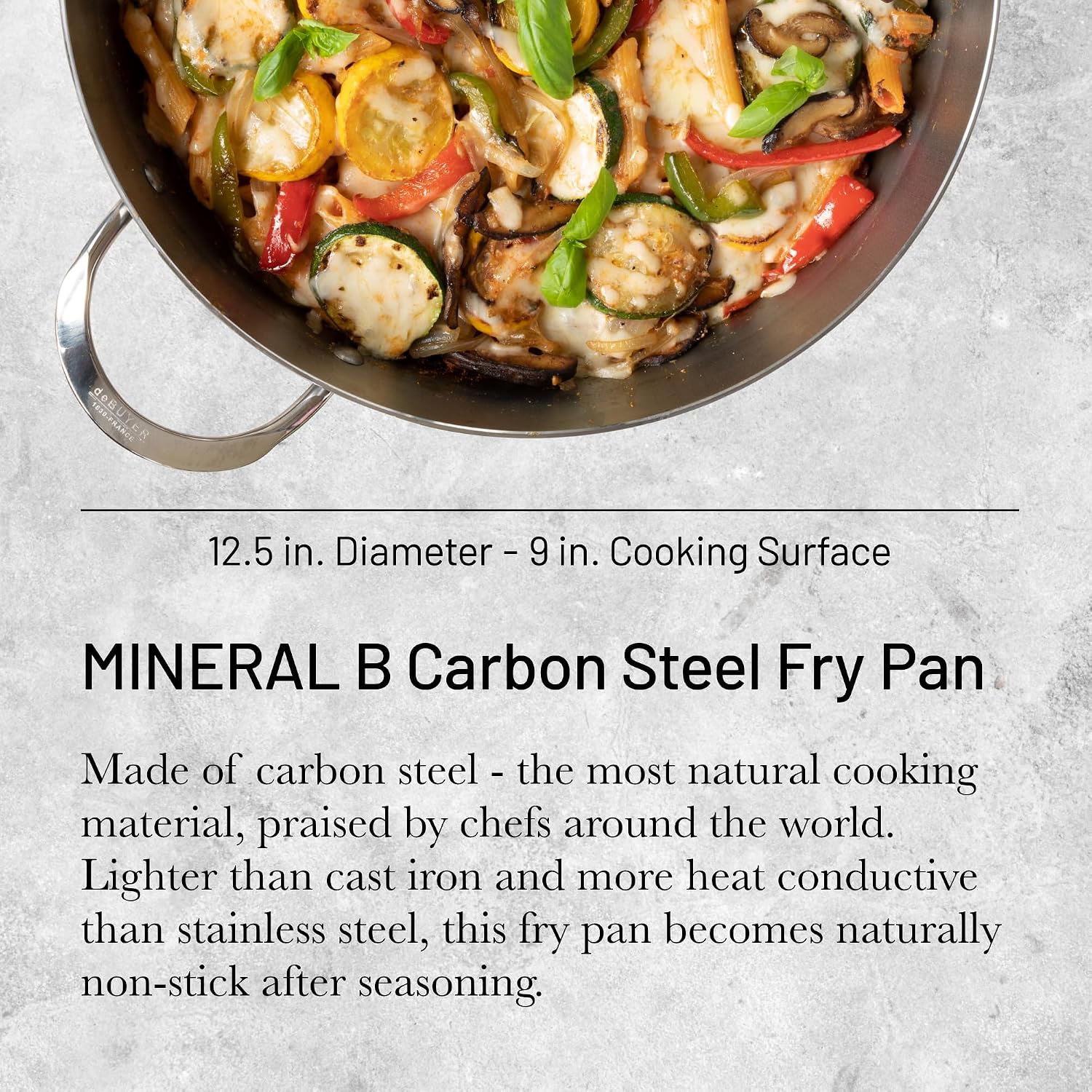
de
$109.99
In stock on Amazon
Check price on AmazonLongevity and Cost-Per-Year Math
Here’s where the economics separate clearly.
By the numbers:
- Premium ceramic nonstick (e.g., GreenPan GP5, Scanpan HaptIQ): $80–$180 at launch; typical useful life with proper care: 2–4 years before noticeable release degradation
- Premium carbon steel (e.g., de Buyer Mineral B, Matfer Bourgeat): $60–$130; useful life: effectively indefinite with basic maintenance
- Implied cost-per-year at year 5: ceramic ≈ $25–$60/yr (assuming one replacement); carbon steel ≈ $12–$26/yr
Wirecutter’s guide “The Best Nonstick Pans” addresses this lifecycle issue directly, noting that no nonstick coating — ceramic or PTFE — is permanent, and that cooks who use these pans daily should plan for eventual replacement. Carbon steel doesn’t carry that replacement math. A de Buyer Mineral B that’s been properly seasoned and maintained will outlast multiple rounds of ceramic nonstick pans.
The caveat: carbon steel has an upfront learning curve — seasoning cycles, reactive surface, initial rust risk if stored wet — that represents a real time investment. That time has a cost, just not a dollar one.
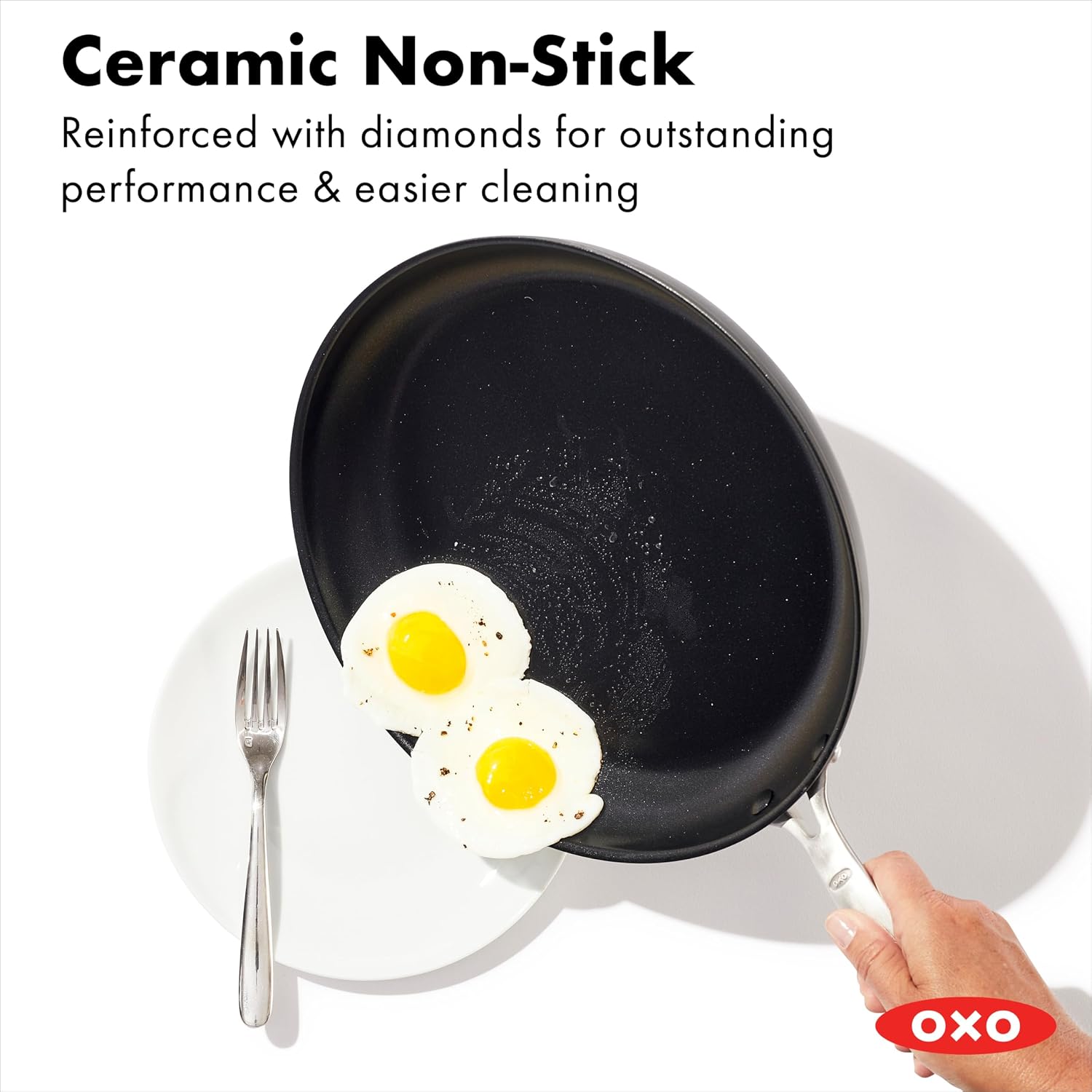
OXO
$79.99
In stock on Amazon
Check price on AmazonReactivity and Flavor Transfer
Carbon steel is reactive. Like cast iron, it can transfer metallic flavor to acidic foods — tomato-based sauces, wine reductions, citrus — especially in the early months before a robust seasoning layer has built up. Serious Eats’ guide “What Is Carbon Steel and How Do You Season It?” explicitly warns against cooking highly acidic dishes in an unseasoned or lightly seasoned carbon steel pan, noting that acid can strip the seasoning and leave a metallic off-note in the food.
Ceramic nonstick is chemically inert. You can deglaze with wine or finish with a squeeze of lemon directly in the pan with no flavor consequences and no surface damage. For cooks who routinely make pan sauces, cook fish with citrus, or work with acidic aromatics as a structural part of the dish, this is a genuine practical advantage.
Decision point: If a meaningful portion of your weeknight cooking involves acidic ingredients held in the pan for several minutes — not just as a finishing touch — ceramic nonstick is the easier material to manage.
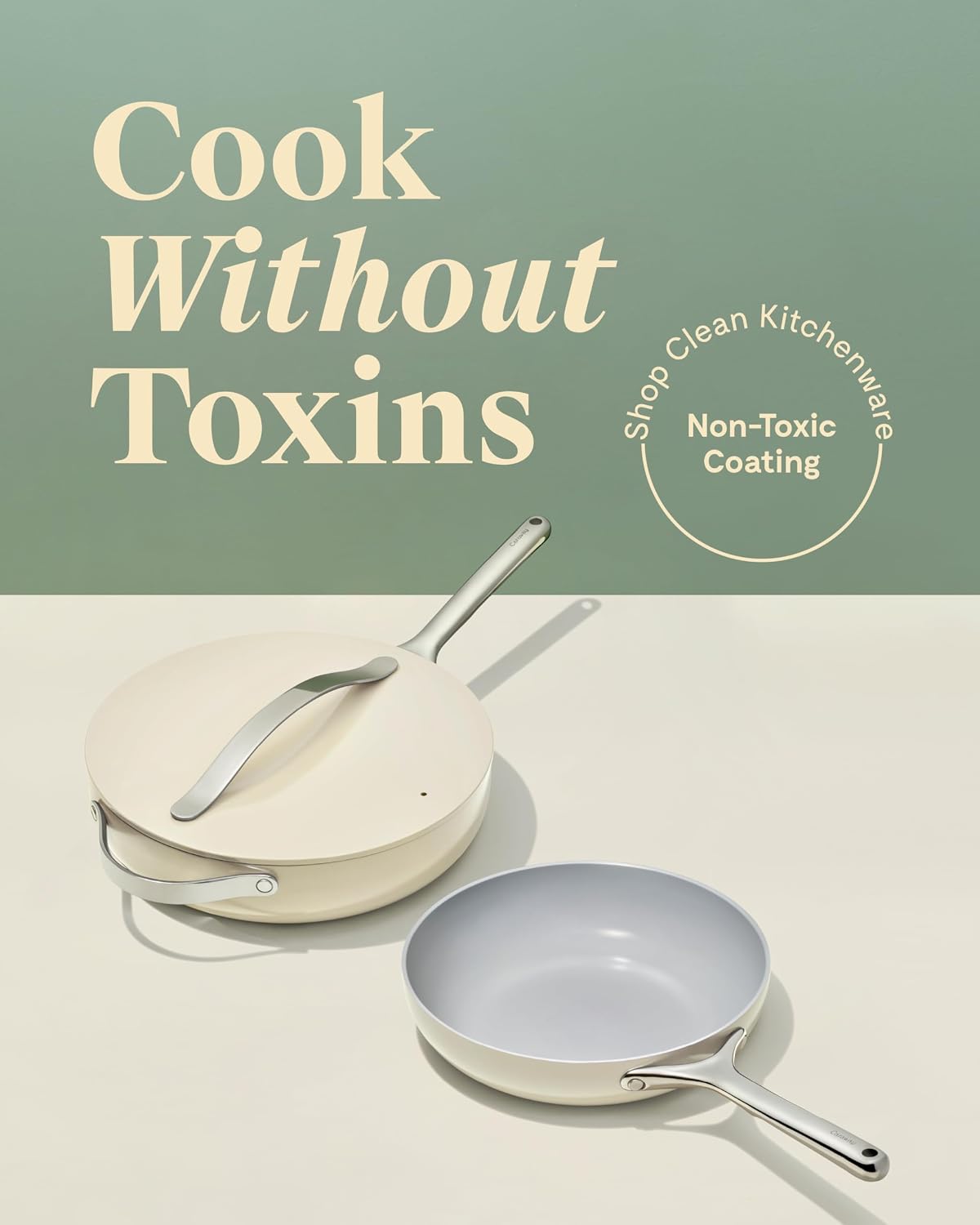
Caraway
$232.00
In stock on Amazon
Check price on AmazonMaintenance Reality
Both pans require some care. The nature of that care is very different.
Ceramic nonstick is low-maintenance in use and high-maintenance in terms of what you cannot do: no metal utensils (they scratch the coating), no dishwasher (thermal cycling degrades the coating bond), no high-heat preheating while empty (thermal shock causes micro-cracking). Following these rules extends ceramic pan life significantly, but the rules require ongoing behavioral discipline in the kitchen. Every deviation chips away at the coating’s useful life.
Carbon steel maintenance works differently. You should not soak it, you should dry it immediately after washing, and a thin oil coat before storage prevents rust. But you can use metal utensils freely, you can crank the heat, and every proper use cycle actively improves the pan rather than degrading it. Cook’s Illustrated’s carbon steel skillet testing describes the Matfer Bourgeat pan as becoming notably more responsive and better-releasing over the first dozen or so proper high-heat uses — a trajectory opposite to ceramic.
The subjective experience is also different. Carbon steel has a craft dimension — seasoning a pan, watching it transform over months from silver-gray to deep brown-black — that many serious home cooks find genuinely satisfying. Ceramic nonstick does not offer that arc.
Versatility Across Cooking Tasks
Neither pan does everything. Understanding the gap helps you decide whether you need both or can commit to one.
Ceramic nonstick excels at:
- Eggs of any style, especially low-and-slow scrambles
- Delicate skin-on fish fillets where you want a clean, confident release
- Crêpes and pancakes
- Any dish where minimal-fat or no-fat cooking matters
Carbon steel excels at:
- High-heat sears — steak, duck breast, scallops
- Stir-fry and wok-adjacent technique on high heat
- Oven-to-stovetop cooking without temperature anxiety
- Long-term everyday cooking where frequency improves the surface
What carbon steel does less well, especially early in its life: anything requiring instant, guaranteed nonstick performance on day one. A new carbon steel pan will stick. That is not a flaw — it is a feature of the material in its initial state — but it requires patience that some cooks genuinely do not have or want.
The Pan Landscape in 2026
The ceramic nonstick market has consolidated around a handful of credible performers. GreenPan’s GP5 line and Scanpan’s HaptIQ remain the reference points at the $100–$180 tier. Both feature thick aluminum cores that address the primary engineering challenge for ceramic-coated pans: even heat distribution given the material’s relatively low thermal mass. Wirecutter has included both in their nonstick pan recommendations in recent testing cycles, citing consistent release performance in the first year and durable construction relative to thinner competitors.
In carbon steel, the field is anchored by de Buyer’s Mineral B Pro and Matfer Bourgeat’s traditional carbon steel skillet — both French-manufactured, both built to the 2–3mm wall thickness that balances responsiveness with enough thermal mass to hold a proper sear. Serious Eats’ roundup “The Best Carbon Steel Skillets, Tested and Reviewed” has rated the Matfer Bourgeat as a top pick for its combination of price (roughly $60–$80 for a 10-inch), construction quality, and performance once properly seasoned. Lodge’s Seasoned Carbon Steel skillet represents the accessible entry point at around $40 and ships pre-seasoned, which meaningfully lowers the barrier for first-time carbon steel cooks.
For the practitioner cook who wants to move up from either category, the de Buyer Mineral B Pro at $90–$110 is the natural upgrade — heavier riveted handle, refined edge geometry for flipping, and the same material specification that French restaurant kitchens have used for decades.
The “If X, Then Y” Decision Frame
If your primary daily-driver task is eggs, delicate fish, and low-fat cooking for one or two people, ceramic nonstick is the right answer — specifically a heavy-gauge option like GreenPan GP5 or Scanpan HaptIQ. Budget for replacement at the 2–3 year mark and treat it as a consumable with a known lifespan.
If you cook proteins at high heat regularly, want a pan that improves over years rather than degrading, cook for more than two people, or are drawn to the craft dimension of maintaining a seasoned surface, carbon steel is the right answer — start with Matfer Bourgeat or de Buyer Mineral B, accept the 4–6 week break-in period, and plan to keep it for a decade or more.
If you’re genuinely split — you cook eggs most mornings but sear a duck breast most weekends — own both. The math supports it: an $80 ceramic pan plus a $90 carbon steel skillet is a $170 investment that covers every cooking scenario better than either pan alone. That’s less than a single mid-tier stainless skillet from All-Clad, and both tools will earn their place on the stovetop every week.
The only decision that doesn’t serve you is buying the wrong pan for your cooking style and absorbing the friction indefinitely. These are tools meant to disappear into your workflow. Pick the one that matches how you actually cook — not how you aspire to cook — and the decision will pay off every time you turn on the burner.