You’re standing in front of a wok display — or more likely a browser tab with fourteen options open — and the listing says “carbon steel, 14-inch, round bottom, 1.5mm.” You know you want a wok. You’re less sure whether those numbers mean this is the right one. Carbon steel (an alloy of iron and a small amount of carbon, lighter and faster-heating than cast iron) is the near-universal choice among Chinese restaurant cooks for good reason: it heats quickly, handles extreme temperatures without complaint, and develops a naturally nonstick patina over time called seasoning. But within that category, two variables — the shape of the base and the thickness of the steel — will define whether your wok performs like a restaurant tool or just looks like one. This guide breaks down exactly what to weigh and when each choice makes sense.
| EDITOR'S PICKMade In Cookware - 13" Seasoned… | Mid-tierYOSUKATA 13.5" Carbon Steel Wok… | Budget pick[Craft Wok Traditional Hand Hamm…](https://www.amazon.com/dp/B00PUZT9MU?tag=greenflower20-20) | |
|---|---|---|---|
| Diameter | 13" | 13.5" | 14" |
| Bottom Shape | — | Flat | Round |
| Pre-seasoned | ✓ | ✓ | — |
| Induction Compat | ✓ | ✓ | — |
| Handles | — | — | Wooden + Steel |
| Origin | Sweden | — | — |
| Price | $149.00 | $62.99 | $57.75 |
| See on Amazon → | See on Amazon → | See on Amazon → |
Round Bottom vs. Flat Bottom: This Is a Stove Question First
The shape of a wok’s base isn’t a cultural detail — it’s an engineering decision driven entirely by your heat source.
Round-bottom woks are designed for traditional high-BTU gas burners, particularly the ring-shaped jet burners common in Chinese restaurant kitchens. The curved base cradles directly over the flame, allowing heat to climb up the sides of the pan. This is how wok hei — that slightly smoky, breath-of-the-wok char that distinguishes restaurant stir-fry from home-cooked — is generated: intense, directional heat that hits both the bottom and the lower walls simultaneously. A round-bottom wok on a standard Western gas burner is still workable with a wok ring (a metal collar that props the pan over the grate), but the BTU gap between a home burner at 15,000 BTU and a restaurant jet burner at 150,000 BTU or more is not trivial. According to Serious Eats’ “The Best Woks, Tested and Reviewed,” this BTU deficit is the primary reason home cooks struggle to replicate restaurant stir-fry, regardless of pan choice.
Flat-bottom woks solve the contact problem for Western kitchens. A flat section — typically 4 to 5 inches across — sits flush against electric coil, glass-ceramic, and induction cooktops, which require direct surface contact to transfer heat. On a standard gas range, the flat bottom also sits on the grate without a ring, which is more stable for high-heat tossing. The tradeoff: the geometry is a compromise. Heat distribution up the walls is less uniform than in the round-bottom design over its native flame. Wirecutter’s “The Best Wok” guide consistently notes that for the majority of North American home cooks using conventional ranges, a flat-bottom wok in the 14-inch range is the practical default — not a lesser option, just an honestly designed one.
The decision rule here is simple: If you cook on induction or electric, flat bottom is non-negotiable — round bottoms won’t maintain stable contact. If you have a gas range producing under 18,000 BTU (check your range spec sheet or model number online — most home burners run 9,500 to 15,000 BTU), a flat bottom will also outperform a round one on that burner because you’ll get better thermal contact. Reserve round-bottom selection for cooks with high-output outdoor wok burners, dedicated wok ranges, or standalone propane rings sold for outdoor use.
Gauge: Why the Millimeter Number Is the Spec That Actually Matters
“Carbon steel” describes a material category, not a single product. The variable that determines how that material performs is gauge — the thickness of the steel, typically expressed in millimeters for woks.
Here’s the core tension: thinner steel heats faster; thicker steel holds heat longer and resists warping.
Cook’s Illustrated’ carbon steel cookware material analysis observes that 1.5mm pans are noticeably more prone to warping on high-heat electric surfaces compared to 2.0mm-and-above options. On a flat-bottom wok, warping is a functional failure — it rocks on the burner and creates uneven heating that no amount of technique compensates for.
The Gauge Spectrum for Carbon Steel Woks
| Thickness | Common Application | What Owners Report |
|---|---|---|
| 1.2–1.5mm | Entry-level / lightweight | Heats fast, responsive; prone to hot spots and warping under sustained high heat |
| 1.6–2.0mm | Mid-range sweet spot | Balance of responsiveness and stability; preferred range in long-run reviews |
| 2.0–3.0mm | Heavy-gauge / pow wok | Excellent heat retention; heavier (a 14-inch at 2.5mm can run 5–6 lbs); slower recovery |
Where gauge interacts with base shape: A round-bottom wok can get away with slightly thinner steel because the pan is designed to be in near-constant motion over live flame — you’re not leaving it static on a hot burner. A flat-bottom wok that sits stable on a glass-ceramic surface needs enough mass (2.0mm minimum, ideally) to resist the warping that high, sustained heat will cause over repeated use cycles.
The Brands Worth Naming: Budget, Mid-Tier, and Premium
A handful of manufacturers show up consistently in professional kitchens and in testing done by outlets including Serious Eats and Wirecutter. They cluster naturally into three tiers based on price, gauge, and construction method.
Budget Pick: Joyce Chen Classic Series Flat-Bottom Carbon Steel Wok
Joyce Chen’s 14-inch flat-bottom carbon steel wok has been a consistent entry-level recommendation in both Wirecutter’s “The Best Wok” and Serious Eats’ wok research for years. The gauge runs closer to 1.5mm, which is a real limitation if you’re cooking on electric or glass-ceramic — but for a home gas range at medium-high heat with moderate volumes, it is a legitimate starting point for a cook who wants to learn the material before investing further. Street price typically lands in the $35–$45 range, making the cost-per-lesson math hard to argue with.
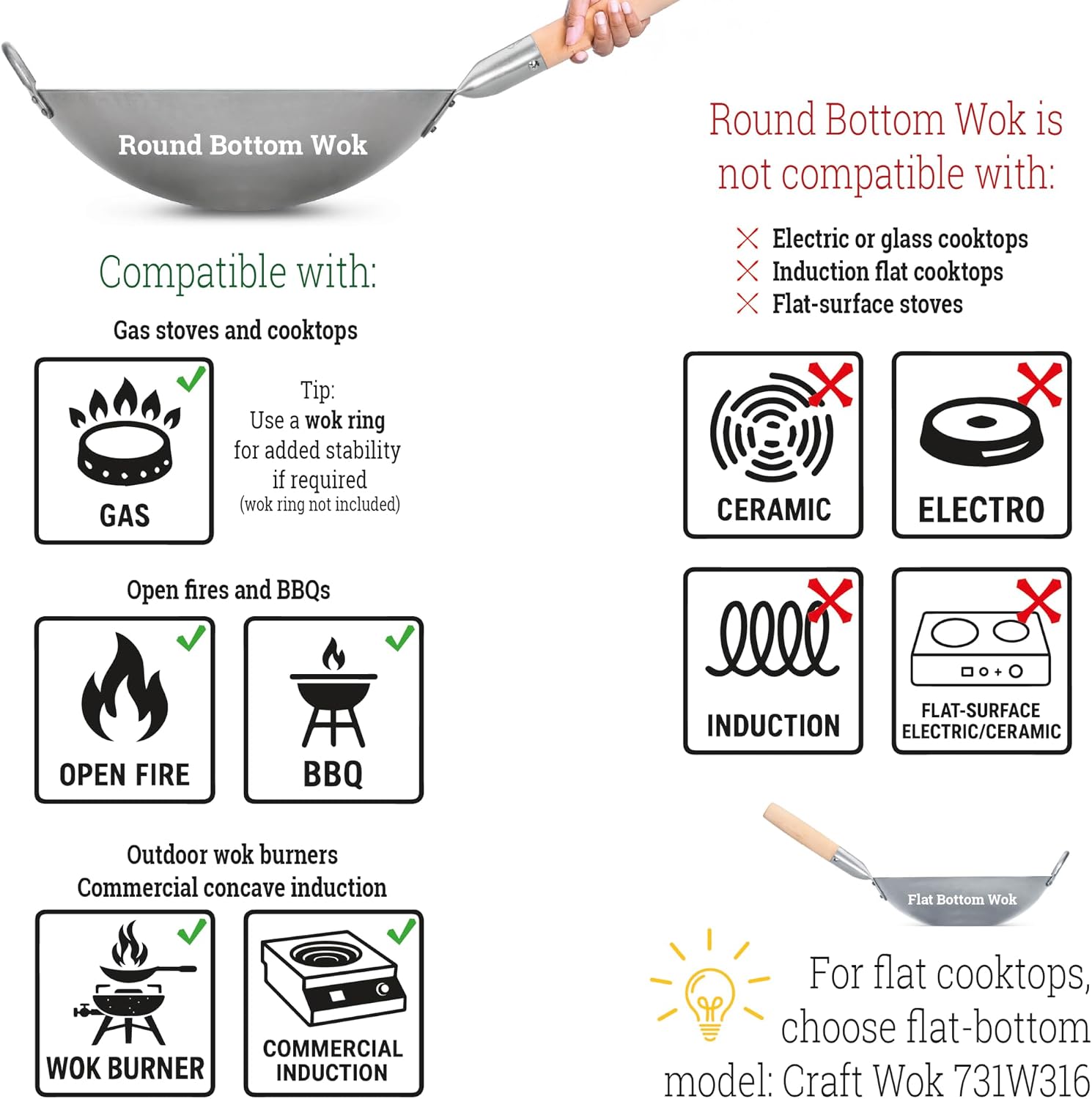
Craft
$57.75
In stock on Amazon
Check price on AmazonMid-Tier Pick: Yosukata Flat-Bottom Carbon Steel Wok
Yosukata’s flat-bottom carbon steel wok (13.5-inch, marketed at 1.5–2.0mm) appears frequently in Wirecutter’s wok coverage as a widely available mid-range option, typically priced in the $45–$70 range. Reviewers consistently note that the factory pre-seasoning is cosmetic rather than functional — plan to season from scratch regardless of what the listing says. When properly seasoned over 10–15 high-heat cook sessions, owners report a stable, even patina and no warping issues at the upper end of the gauge range. For cooks on gas or induction who want a proven mid-range flat-bottom, this is a clear value reference point heading into 2026.
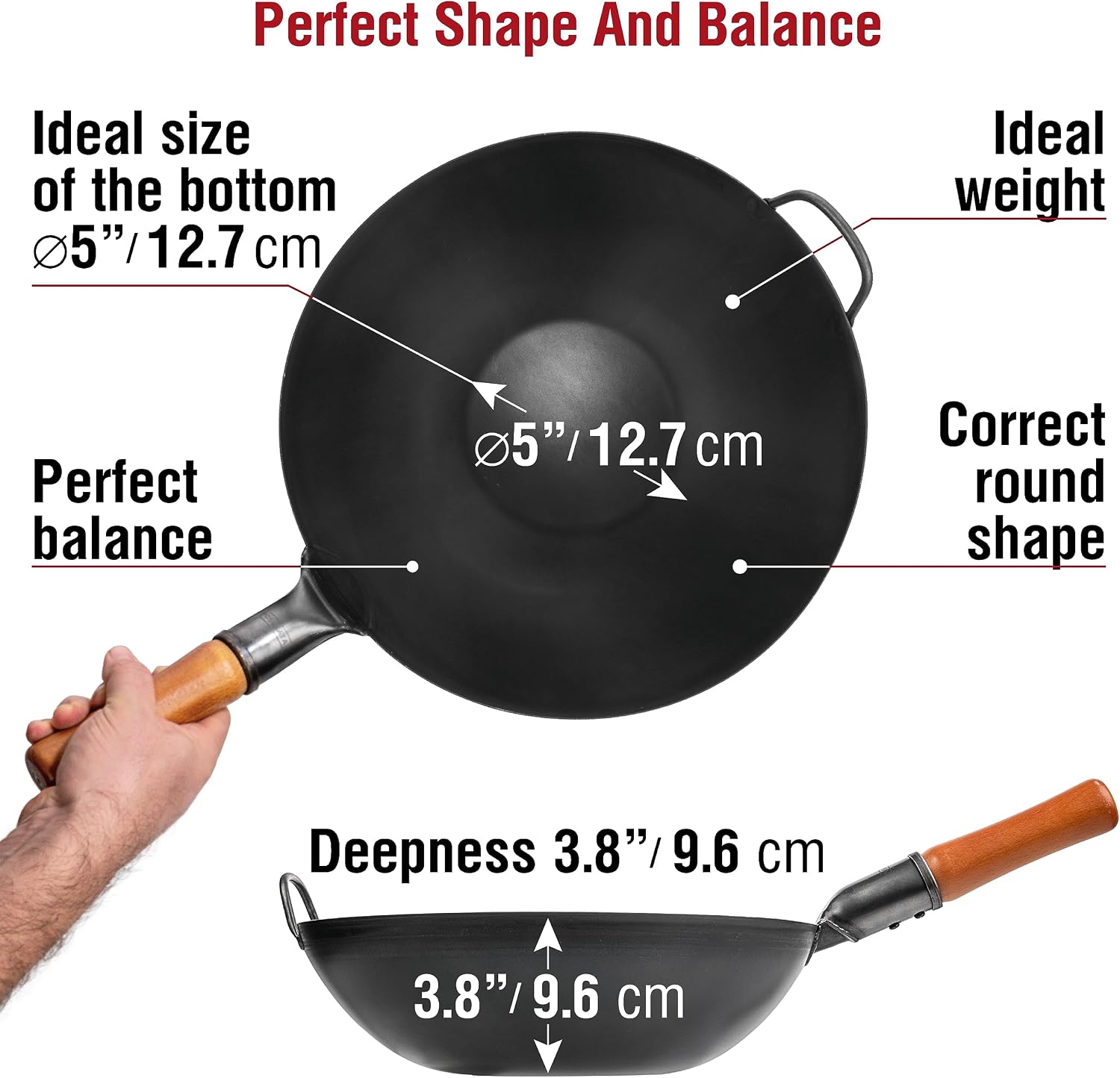
YOSUKATA
$62.99
In stock on Amazon
Check price on AmazonPremium Pick: Craft Wok Traditional Hand-Hammered Round-Bottom
Craft Wok’s traditional hand-hammered carbon steel wok (typically 15-inch round-bottom at approximately 2.0mm) is one of the most-cited practitioner-tier options across aggregated reviews at Serious Eats and in specialty cookware coverage. The hand-hammering creates a slightly textured surface that helps seasoning adhere faster than machine-pressed smooth steel — a meaningful functional advantage, not a cosmetic one. The round-bottom format targets buyers with high-output outdoor burners or dedicated wok ranges; on a standard home gas range, a wok ring is required, and the BTU ceiling of most home burners limits the return on this pan’s geometry. For cooks with a 50,000-plus BTU outdoor propane burner, this is the reference purchase.
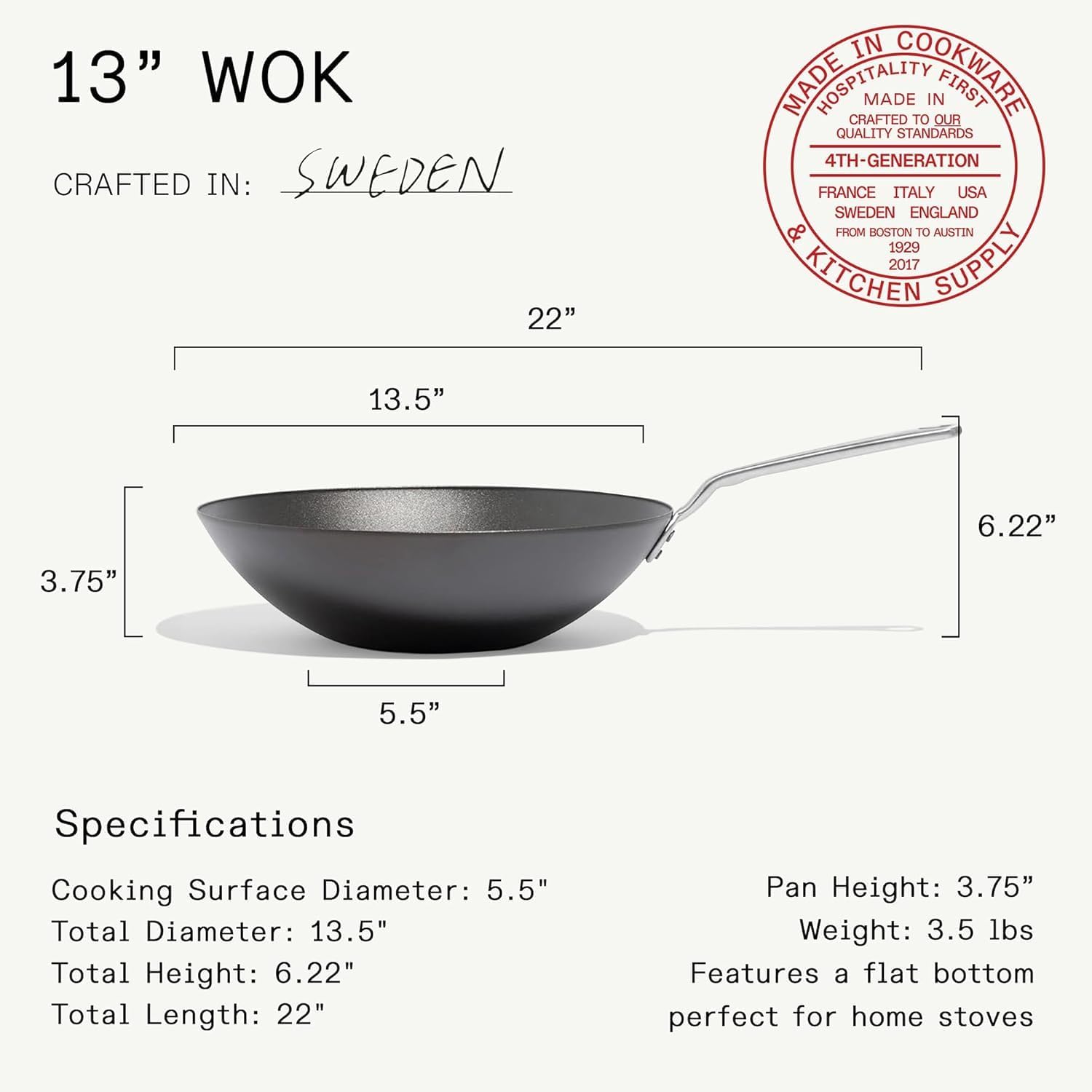
Made
$149.00
In stock on Amazon
Check price on AmazonSeasoning, Maintenance, and the Real Cost of Ownership
Carbon steel woks require seasoning — a process of polymerizing thin layers of oil onto the steel surface at high heat to create a natural nonstick coating. This is not optional and not a one-time event. The payoff is a surface that, once established, releases food as well as a well-maintained nonstick pan and can handle temperatures that would destroy a PTFE coating.
Saveur’s “How to Season and Care for a Carbon Steel Wok” is the clearest step-by-step guide available for this process, and its method applies universally across brands: heat the dry pan until it smokes, apply a very thin coat of high-smoke-point oil with a paper towel, heat again until the oil polymerizes, and repeat the process in three to five cycles before the first cook. Each subsequent cook session builds the patina further.
The maintenance rules are straightforward: no dishwasher, no prolonged soaking, a brief rinse and wipe after each use, and a thin oil coat before storage. In exchange, a properly maintained carbon steel wok lasts decades. The cost-per-use math, amortized against a $40–$70 purchase price over five-plus years of regular cooking, is favorable by any measure.
One practical note raised in Saveur’s maintenance coverage: high-acid ingredients — tomatoes, vinegar-based sauces — will strip seasoning if introduced before the patina is fully established, which typically takes 8–10 high-heat cook sessions. Once seasoning is mature, brief contact with acidic ingredients is generally fine. New wok owners who attempt to braise acidic dishes in week one are the primary source of “the seasoning came off” complaints.
By the Numbers
- 1.5mm vs. 2.0mm weight difference: A 14-inch flat-bottom wok at 1.5mm weighs approximately 3.0–3.5 lbs. At 2.0mm, expect 4.0–4.8 lbs. The weight difference is real when tossing, but the warp resistance of the heavier gauge on electric and induction surfaces is non-negotiable for long-term use.
- BTU threshold for round-bottom payoff: Meaningful wok hei on a round-bottom pan typically requires sustained heat well above what most home ranges produce. Most home gas burners peak at 12,000–18,000 BTU; outdoor propane wok burners from brands like Eastman Outdoors and Camp Chef commonly reach 65,000–160,000 BTU.
- Price range: Functional carbon steel woks (flat-bottom, 14-inch, 2.0mm) range from roughly $35 at the entry level to $75 at the mid-range hand-hammered tier. Above $75, you are generally paying for provenance or distribution margin rather than improved performance.
The Decision Frame
If you’re building toward a purchase decision right now, here’s the if/then structure:
If you cook on induction or electric: Flat bottom, minimum 2.0mm gauge. Both conditions are non-negotiable. The Joyce Chen entry-level at 1.5mm is adequate for very light use on gas, but for serious stir-fry volumes on electric or induction, the heavier gauge — a Yosukata 2.0mm or equivalent — is the correct buy. The warp risk on thinner steel over an electric element is not hypothetical; Cook’s Illustrated’s carbon steel analysis documents it directly.
If you cook on a home gas range under 18,000 BTU: Flat bottom still wins on stability. At this BTU level, the performance difference between round and flat is negligible, and the stability of a flat bottom during high-heat tossing is a genuine practical advantage. Gauge still matters — stay at 2.0mm minimum for durability.
If you have a high-output outdoor burner (50,000-plus BTU): This is the use case where round-bottom carbon steel earns its reputation. A Craft Wok 15-inch traditional round-bottom at 2.0mm hand-hammered steel is the practitioner-tier reference purchase here. The geometry pays off at this heat level in a way that no flat-bottom design fully replicates.
If you’re unsure and want to learn the material first: Start with a 14-inch flat-bottom in the $35–$55 range, master the seasoning process over 10–15 cook sessions, and upgrade when you’ve identified exactly what your cooking requires. The real value in a first carbon steel wok is in what you learn about heat management — and that knowledge transfers directly to every pan you own afterward.
The gauge number and the base shape together are the only specs that actually determine performance. Everything else on the listing is secondary.