You’ve been cooking on stainless or cast iron for years, and somewhere along the line someone told you carbon steel is the pan that professional kitchens actually use. So now you’re standing at the crossroads between de Buyer, Matfer Bourgeat, Merten & Storck, and Made In — four brands that show up at the top of every serious comparison — and the reviews are sending you in four different directions. Here’s the short translation before we go deep: carbon steel is a lightweight alloy (mostly iron, a small percentage of carbon) that heats fast, tolerates screaming-hot temperatures, and — once seasoned (meaning coated with baked-on oil that creates a natural nonstick surface over time) — can rival a well-loved cast iron pan at roughly half the weight. The tradeoff is that the seasoning has to be built and maintained; carbon steel is reactive until it’s fully cured, and technique matters more here than with a forgiving nonstick or stainless skillet. This article walks you through how each brand stacks up, where the real tradeoffs live, and which pan earns its place on your stovetop.
Why Carbon Steel Attracts Serious Home Cooks in the First Place
Cast iron devotees already know most of this story: high-heat retention, a surface that improves with every use, and zero synthetic coatings to worry about. Carbon steel checks the same boxes and adds a few of its own. It’s lighter — typically 20 to 40 percent lighter than a comparable cast iron piece — which matters when you’re sautéing vegetables, finishing a sauce, or moving a pan from burner to oven to table. It also heats up faster, responding to temperature changes more quickly than cast iron’s thermal mass allows.
Serious Eats’ equipment overview of carbon steel skillets notes that the material is standard equipment in European restaurant kitchens precisely because it combines sear capability with the maneuverability of a lighter pan. Wirecutter’s carbon steel pan review reinforces that point, noting that fully seasoned carbon steel is nearly as nonstick as a dedicated nonstick pan — with the added benefit of indefinite longevity if you treat it right.
The caveat, and it’s a real one: getting there takes patience. Carbon steel ships raw (or with a factory coating that needs to be removed), it needs an initial seasoning, and it will stick badly if you rush that process or cook acidic ingredients too early. That learning curve is exactly what separates enthusiastic long-term owners from frustrated first-month returners — and it’s most visible when you compare the Made In review distribution against the other three brands, which we’ll come back to.
The Four Contenders: Where They Stand
de Buyer Mineral B — The European Benchmark
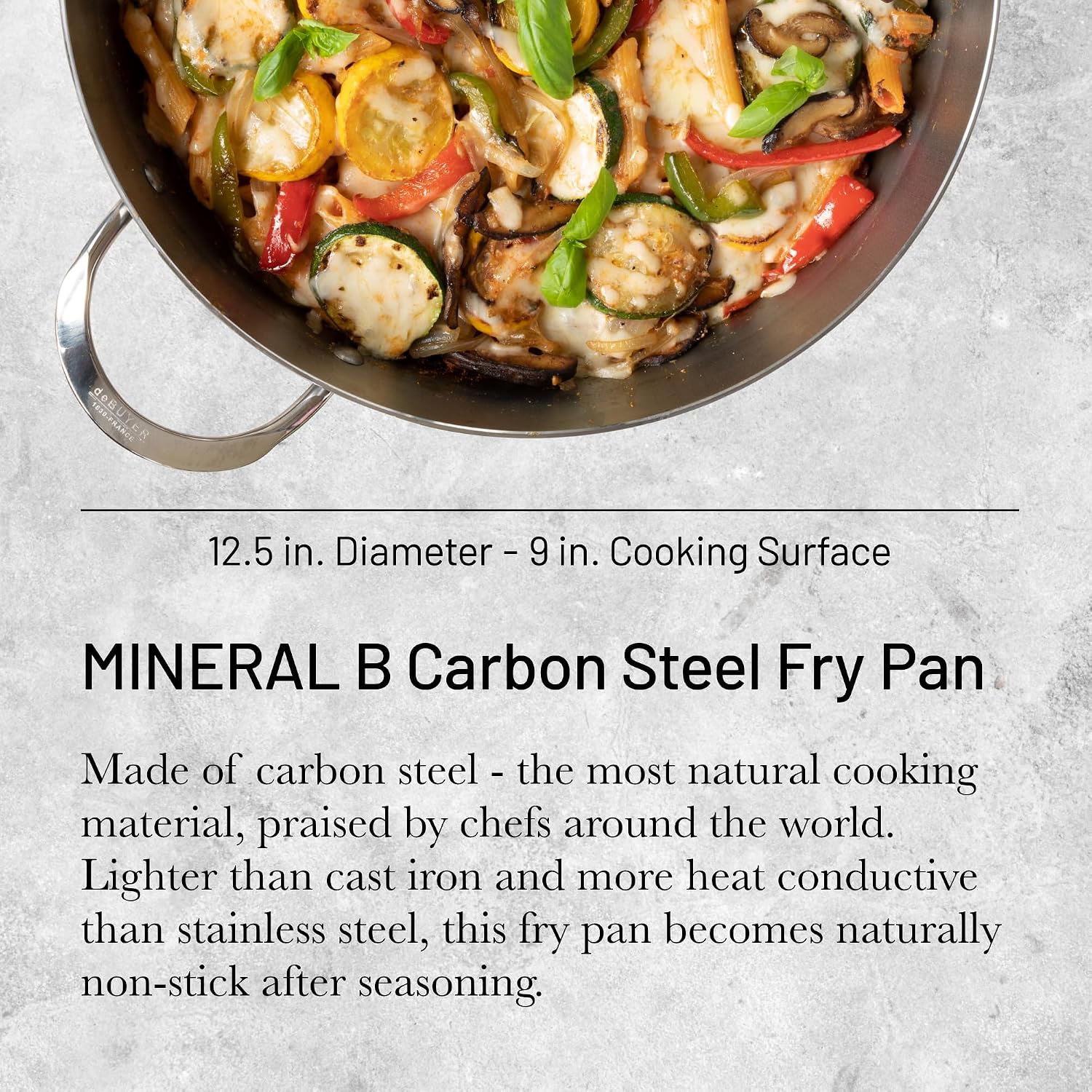
de Buyer is a French manufacturer with over 180 years in professional kitchen supply, and the Mineral B is their flagship carbon steel line. The pan ships with a beeswax coating — not a factory seasoning, but a rust-prevention layer you remove before first use — and uses a riveted steel handle that stays relatively cool on the stovetop during shorter cook sessions.
Owners coming from cast iron consistently flag one thing: it’s lighter than they expected. Serious Eats’ carbon steel skillet coverage notes that this can read two ways — as a welcome maneuverability upgrade, or as a mild surprise for cooks who equate heft with quality. Both reactions are legitimate. The pan is thinner-gauged than cast iron by design, and that’s precisely the point.
The de Buyer Blue variant — a separate product line using a heat-blued steel rather than beeswax — draws specific praise around its weight balance and the visual appeal of the blue patina that develops during manufacturing. Food & Wine’s tested roundup of carbon steel pans flags it as a strong choice for cooks who want the carbon steel performance story with a slightly more distinctive aesthetic. It behaves identically to the Mineral B in use; the difference is cosmetic and in the initial surface treatment.
Cook’s Illustrated’s carbon steel skillet equipment review gives the Mineral B high marks for evenness of seasoning development across the cooking surface and for its wide, sloped sidewalls that make tossing and folding easier than a steeper-sided pan allows.
The tradeoff: de Buyer sits at the higher end of the price range in this category. If you’re deciding between it and Merten & Storck purely on a value-per-dollar basis, the gap is real and worth naming.
Made
$129.00
In stock on Amazon
Check price on AmazonMatfer Bourgeat — The Loyalist’s Pan
Matfer Bourgeat is another French professional supply brand, and its carbon steel pan has developed something unusual in owner review pools: conspicuous loyalty. Owners don’t just say they like it — they note which other pans it replaced and why they came back to it after trying alternatives.
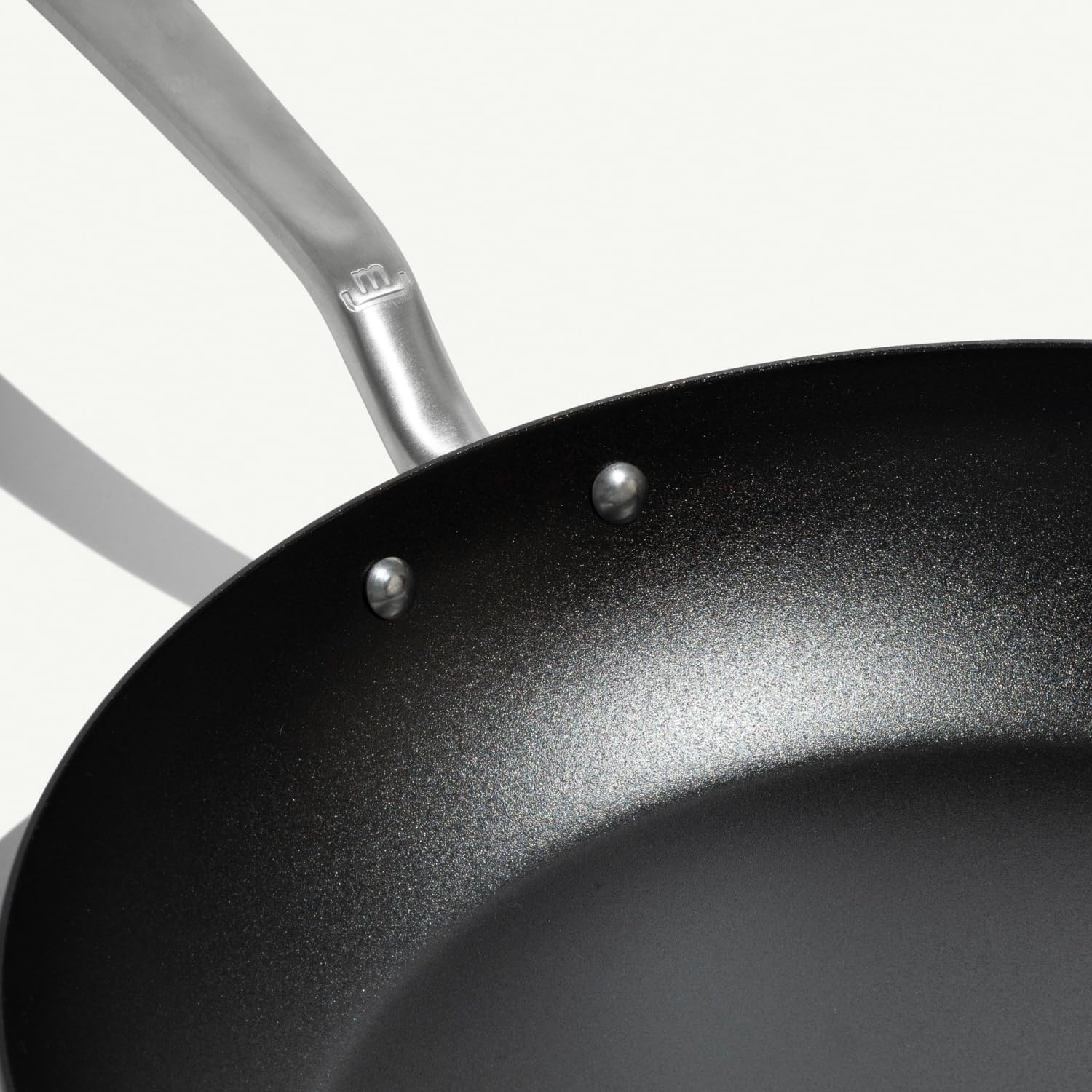
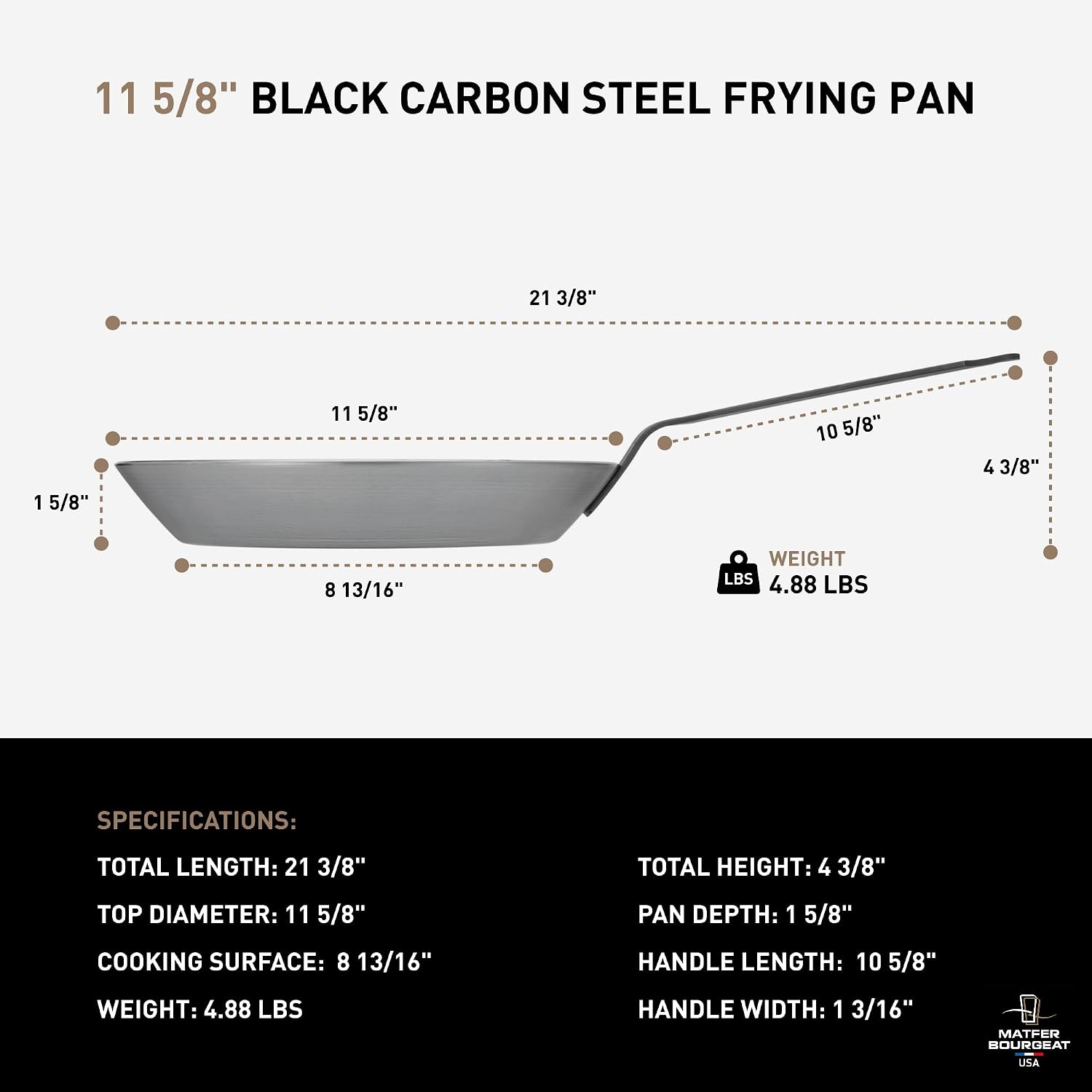
What drives that loyalty? A few things come up repeatedly. The handle geometry is often cited — a long, straight handle with a slight upward angle that balances the pan well and keeps your knuckles clear of the burner. The gauge (thickness of the steel) is slightly heavier than the de Buyer Mineral B in comparable sizes, which owners report translates to slightly more forgiving heat distribution and a less steep learning curve during initial seasoning.
Wirecutter’s carbon steel pan review has historically pointed to Matfer as an approachable entry point for cooks new to carbon steel — the heavier gauge provides a small buffer against the immediate sticking experience that trips up first-time carbon steel users who don’t yet know to preheat the pan before adding fat.
The tradeoff: The handle is uncoated steel. It heats up over time on a gas burner in a way that the de Buyer’s riveted handle manages better — a minor but real annoyance noted by owners running longer stovetop sessions.
Matfer
$113.00
In stock on Amazon
Check price on AmazonMerten & Storck — The Credible Budget Option
Merten & Storck is a German brand that entered the U.S. carbon steel market at a meaningfully lower price point than de Buyer or Matfer, and the question for this audience is always: does cheaper mean worse, or does it mean a different value calculation?
The most useful signal in the owner review data is the long-run experience: owners who describe it as their daily driver consistently note that early sticking problems resolved once they moved past the break-in period and adjusted their preheating technique. That kind of technique-honest, time-extended review is more useful than a first-impression five-star, and it suggests the pan performs well once the relationship is established.
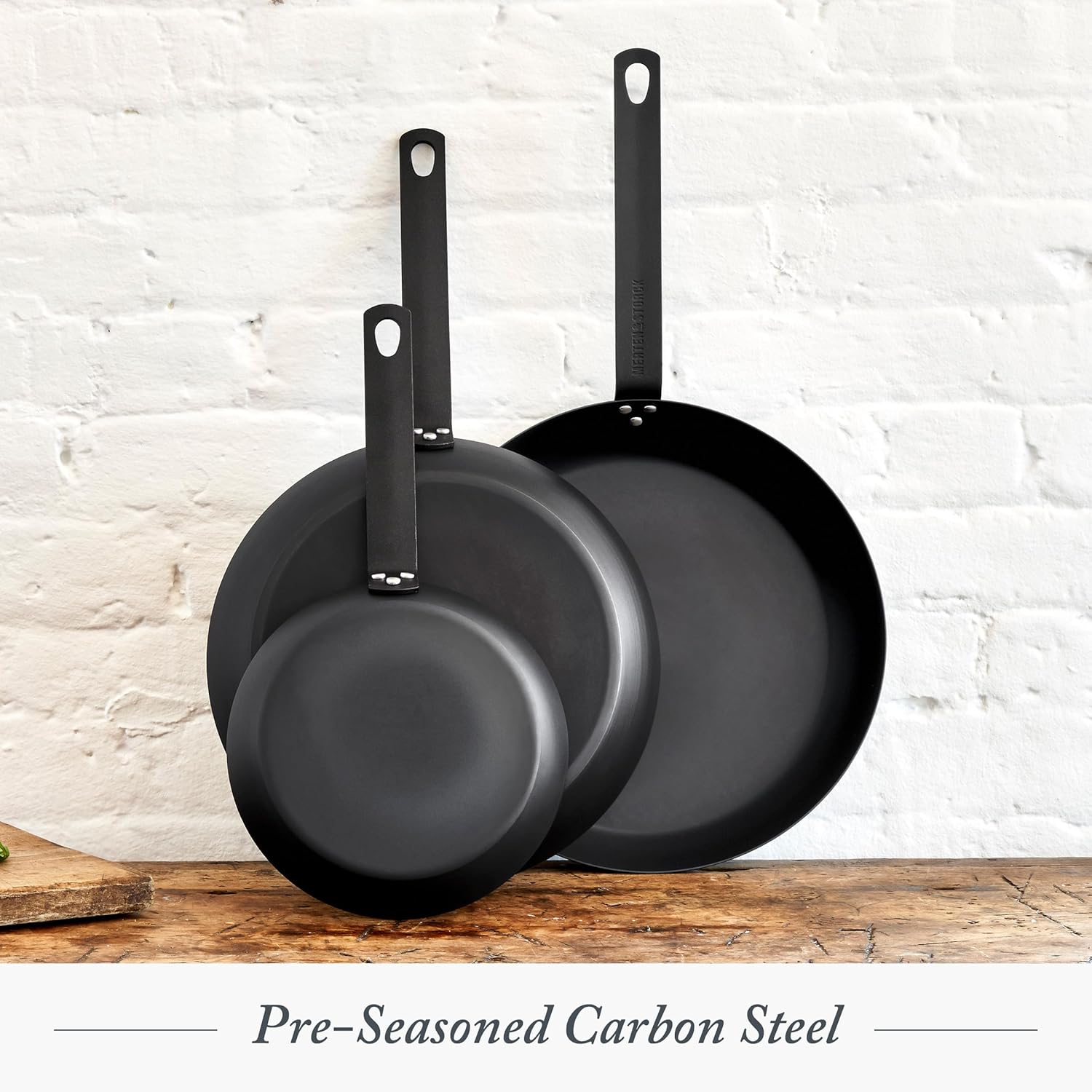
Merten & Storck comes pre-seasoned from the factory, which lowers the barrier to first use but doesn’t replace the work of building a proper seasoning through cooking. The early sticking complaints that appear in negative reviews almost uniformly describe treating the factory seasoning as a finished product rather than a starting point — skipping the cook-in period that any carbon steel pan requires.
The tradeoff: The gauge is thinner than the Matfer, which makes it slightly more reactive to heat spikes. For a first carbon steel pan or a second pan for camping or a backup burner, Merten & Storck’s value story is genuinely strong. The cost-per-year math shifts considerably at the price differential.
Merten
$59.99
In stock on Amazon
Check price on AmazonMade In Carbon Steel — The High Technique-Sensitivity Pan
Made In is a direct-to-consumer American brand that has built a reputation across its stainless and nonstick lines. Their carbon steel skillet is the outlier in this group — not because it’s bad, but because the owner review distribution is unusually polarized compared to the other three.
On one end: owners who apply a specific protocol — a double oven-season using shortening before ever putting the pan on a stovetop — report excellent, consistent results. On the other end: owners who skip that step encounter significant sticking and conclude the pan is defective. The gap is almost entirely explained by technique sensitivity. The Made In’s surface requires more deliberate initial seasoning than the Matfer or Merten & Storck before it develops reliable release.
Food & Wine’s tested carbon steel roundup notes that Made In’s skillet scores well for aesthetics and handle ergonomics but rewards patient seasoning more than some competitors in the category. That’s a fair characterization. For an experienced carbon steel user who already knows the oven-seasoning protocol, the extra front-loading is a non-issue. For a cook who expects reasonable out-of-box performance, it’s a real frustration.
The tradeoff: If you already have carbon steel experience and are willing to front-load the seasoning work, Made In delivers a well-balanced, ergonomically thoughtful pan. If you’re early in the learning curve, the Matfer or Merten & Storck will be more forgiving entry points.
Matfer
$113.00
In stock on Amazon
Check price on AmazonSide-by-Side Specifications
| Brand | Country | Pre-Seasoned | Approx. Gauge | Relative Price |
|---|---|---|---|---|
| de Buyer Mineral B | France | No (beeswax) | ~2.5–3mm | $$$ |
| Matfer Bourgeat | France | No | ~3mm | $$$ |
| Merten & Storck | Germany | Yes (factory) | ~2–2.5mm | $$ |
| Made In | USA (DTC) | No | ~2.5mm | $$–$$$ |
Gauge figures drawn from manufacturer-published specifications and cross-referenced against Cook’s Illustrated carbon steel skillet equipment notes. Price tiers reflect mid-2026 market positioning.
Decision Framework: If X, Then Y
You’re not choosing the “best” carbon steel pan in the abstract — you’re choosing the right one for your current situation.
If you’re buying your first carbon steel pan with no prior experience: Start with Matfer Bourgeat or Merten & Storck. The slightly heavier gauge on the Matfer provides more forgiveness during the learning phase; the Merten & Storck’s price point lowers the stakes while you’re building technique. Either one will teach you the material honestly.
If you’re coming from cast iron and want something lighter without sacrificing performance: The de Buyer Mineral B is the direct answer. Owners coming from cast iron consistently adapt well to it, and the weight difference will feel like a genuine upgrade on anything you’re tossing or moving frequently between burner and oven.
If aesthetics and handle ergonomics matter to your kitchen setup: The de Buyer Blue deserves serious consideration. The performance is equivalent to the Mineral B; the blue-patina finish is distinctive in a way that matters if that kind of thing matters to you, and the 11-inch size draws consistent praise for its balance.
If you already have carbon steel experience and are comfortable with a deliberate oven-seasoning protocol: Made In becomes more competitive. The double oven-season with shortening that experienced owners describe is standard technique for any serious carbon steel user — it’s only a barrier if you’re not already doing it.
Frequently Asked Questions
Is the de Buyer Mineral B worth the price over Merten & Storck? Depends on where you are in your carbon steel journey. The de Buyer’s gauge and decades of professional kitchen validation are real — but if you’re buying your first carbon steel pan, Merten & Storck’s lower price point makes the learning curve less expensive. The performance gap between a fully seasoned Merten & Storck and a fully seasoned Mineral B is narrower than the price gap suggests.
How long does it take to fully season a new carbon steel pan through regular cooking? Most owners report that a carbon steel pan starts performing reliably — meaning consistent release on eggs and fish — after roughly 10 to 20 cook sessions, assuming good protocols: heat the pan before adding fat, avoid acidic ingredients early on, and dry it thoroughly after washing. Wirecutter’s carbon steel pan review notes that the first few months of regular cooking are the active seasoning window, and the pan continues improving beyond that point.
Why does the Made In carbon steel get such polarized reviews? Technique sensitivity, almost entirely. Owners who oven-season the pan twice with shortening before first stovetop use report excellent, consistent results. Owners who skip that step or treat the pan like a factory-finished nonstick encounter significant sticking. The pan isn’t defective in the negative-review scenarios — it’s under-seasoned. The frustration is real and predictable; the solution is also predictable.
Can I use carbon steel on induction without an adapter? Yes — all four pans in this comparison are induction-compatible. Carbon steel’s iron content makes it naturally responsive to induction burners. Per manufacturer specifications across all four brands, no adapter is required.
What’s the difference between de Buyer Mineral B and de Buyer Blue carbon steel? The cooking performance is the same. The Mineral B ships with a beeswax rust-prevention coating that you remove before first use; the Blue uses a heat-bluing process during manufacturing that gives the steel a distinctive blue-gray patina and provides similar initial protection. The Blue is also slightly heavier-gauged in most size comparisons, and reviewers specifically praise the balance in the 11-inch size.
How do I fix a carbon steel pan that has started sticking again? Strip and restart. The usual cause is either soap residue breaking down the seasoning or acidic ingredients — tomatoes, wine, citrus — that dissolved part of the surface. Scrub the pan down to bare metal with coarse salt or fine steel wool, dry it completely, and apply thin layers of a high-smoke-point oil (flaxseed, Crisco, or refined avocado oil are all owner-recommended options) in the oven at 450–500°F for an hour, repeated two to three times. Serious Eats’ carbon steel skillet coverage addresses this protocol in detail and notes that re-seasoning is a normal part of carbon steel ownership — not a sign of pan failure.